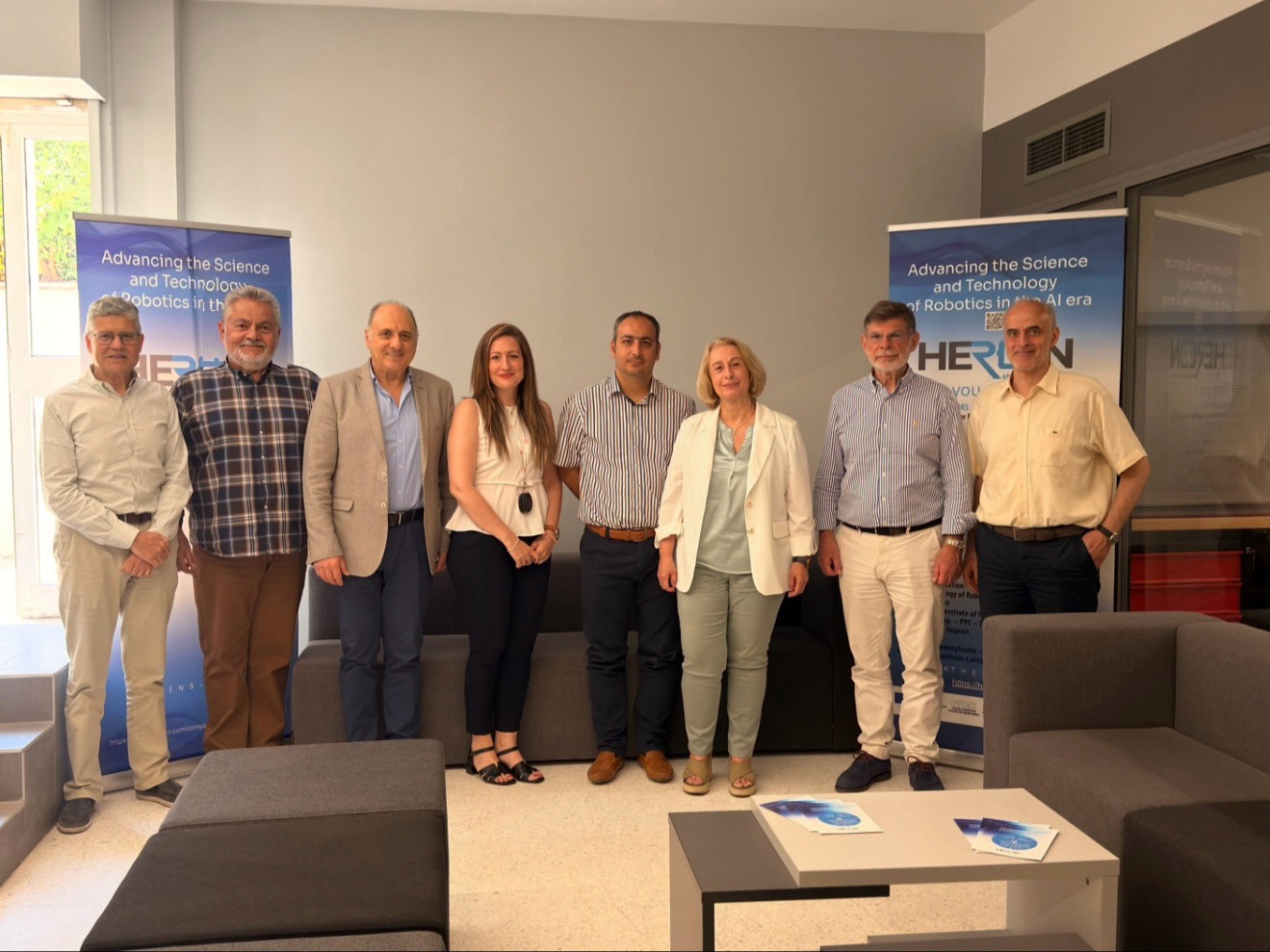
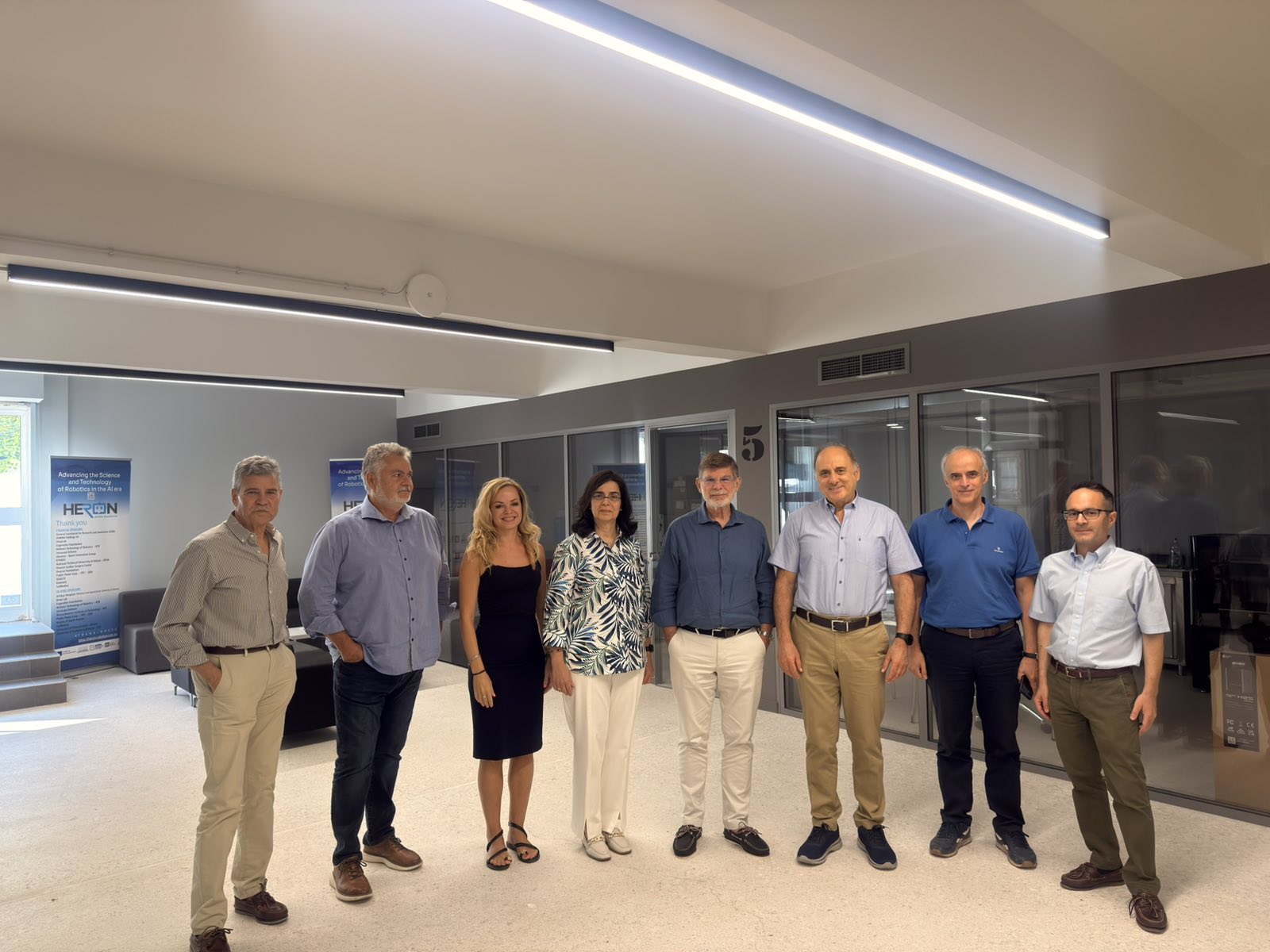
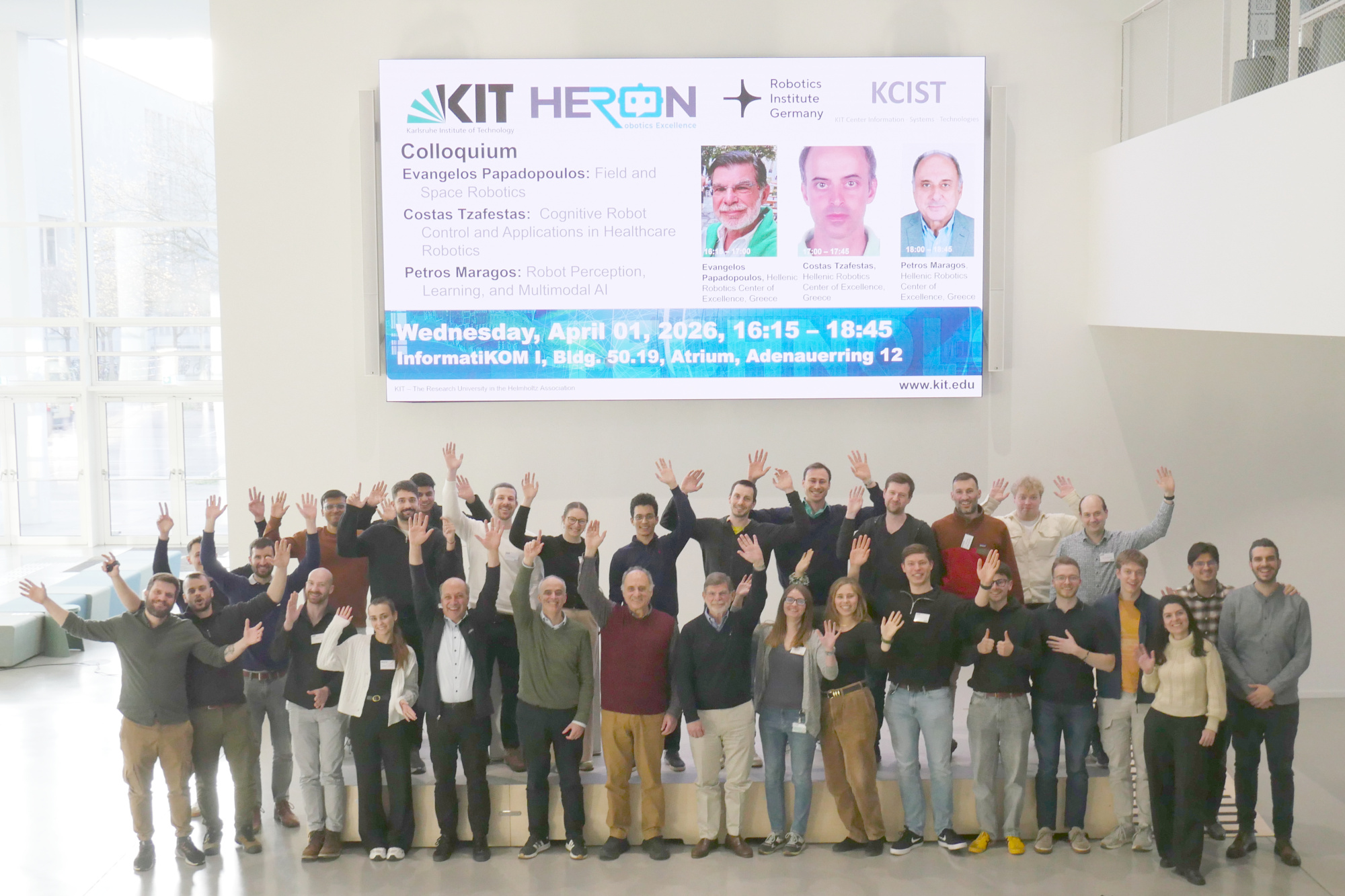
From March 30 to April 2, 2026, the Karlsruhe Institute of Technology (KIT) hosted a four-day HERON visit, bringing together researchers within the HERON project. The visit focused on strengthening collaboration, exchanging research ideas, and fostering new joint initiatives in robotics and human-centered technologies.
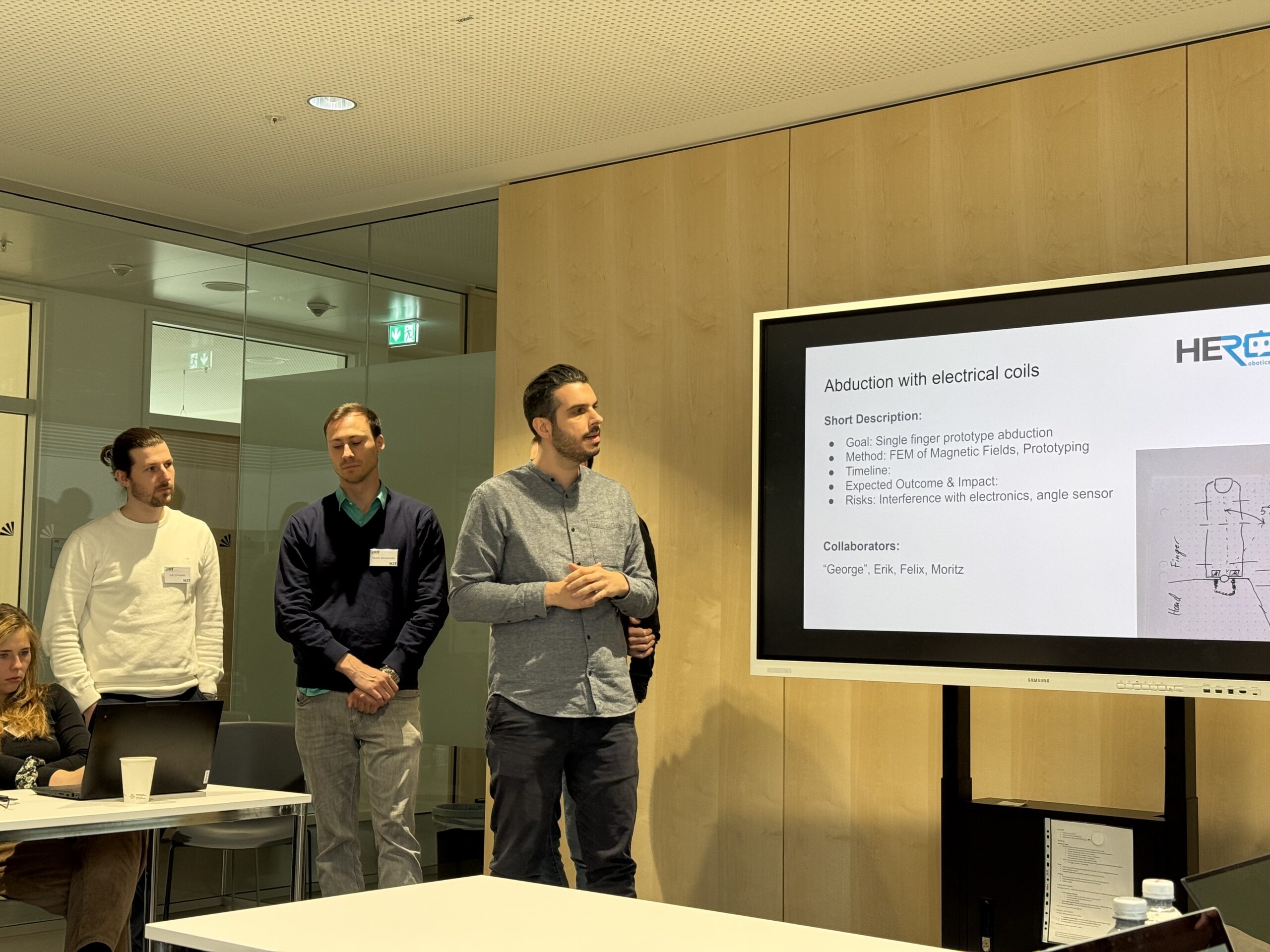
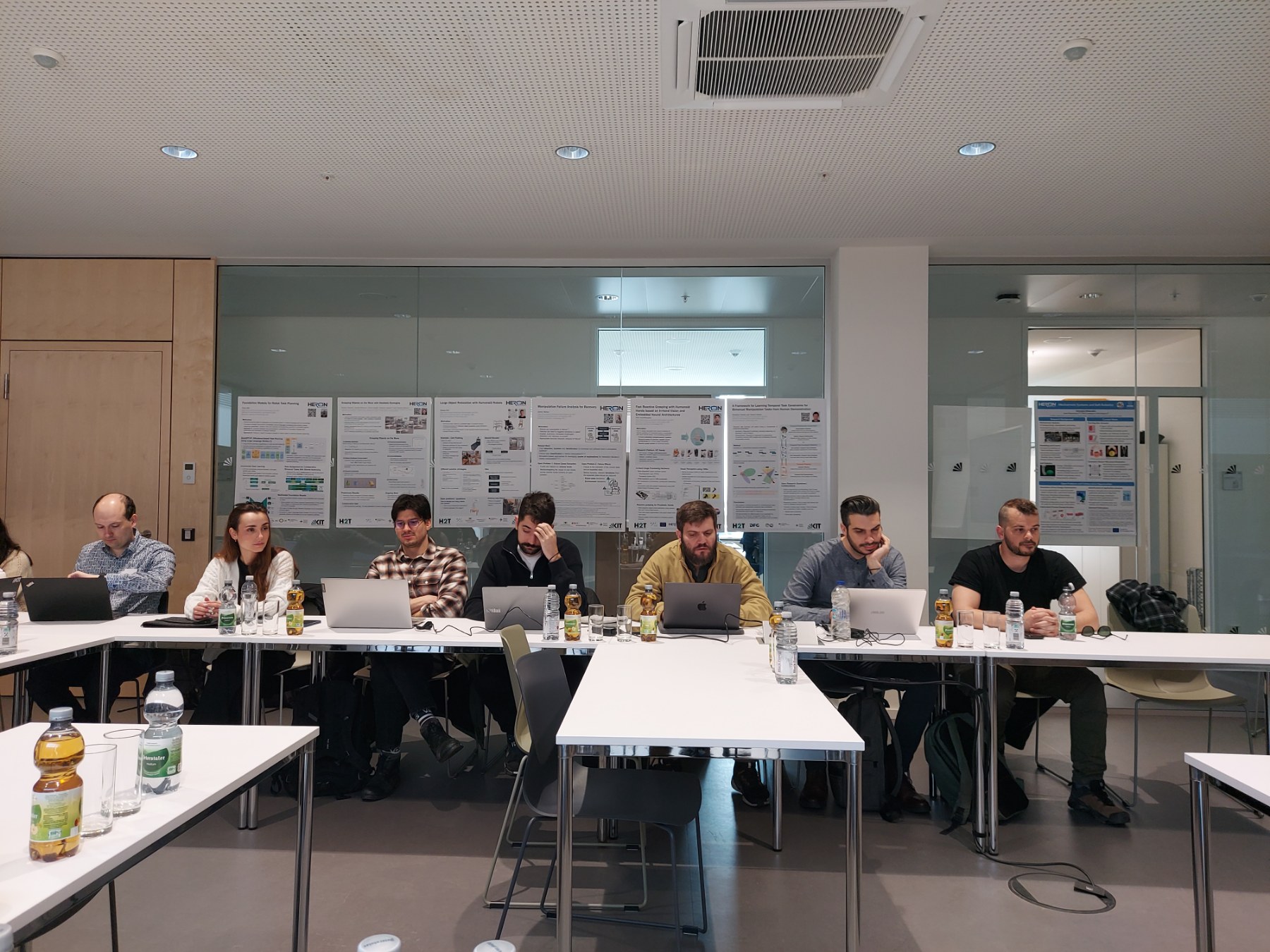
The program began with the presentations of young researchers, where the HERON delegation — including researchers Paris Oikonomou, Katerina Smyrli, Georgios Bolanakis, Athanasios Mastrogeorgiou, Panagiotis Filntisis, Nikolaos Chatzis, Angeliki Tsinouka, and Panagiotis Roditis, together with KIT researchers from Professor Tamim Asfour’s research group Dr. Jonas Kiemel, Timo Birr, Joana Plewnia, Julia Hohensee, Sebastian Nutto, Erik Schroeter, Moritz Moosmuller, Tilman Daab, Engjell Hyseni, Charlotte Marquardt, Jonas Kiemel, Fabian Reister, Sebastian Rietsch, Christian Dreher, Andre Meixner, Niklas Arlt, Felix Hundhausen, Janna Nefzer — presented their research background, current work and scientific interests— introduced their research background, ongoing work, and scientific interests. This session provided a clear overview of the group’s expertise and helped identify common ground for collaboration.
This was followed by an Open Problems Round and a series of brainstorming sessions, during which participants discussed future research interests and explored potential approaches for addressing them. These sessions encouraged open dialogue, creative thinking, and interdisciplinary interaction. The central objective was to promote collaboration between researchers from KIT and the HERON Center of Excellence on a more personal level. Small groups of three to four participants were formed based on common research interests, allowing for targeted discussions and the development of specific ideas organized into group projects. This process led to the emergence of new synergies and laid the foundations for future joint research efforts, which were later presented and discussed with all participants.
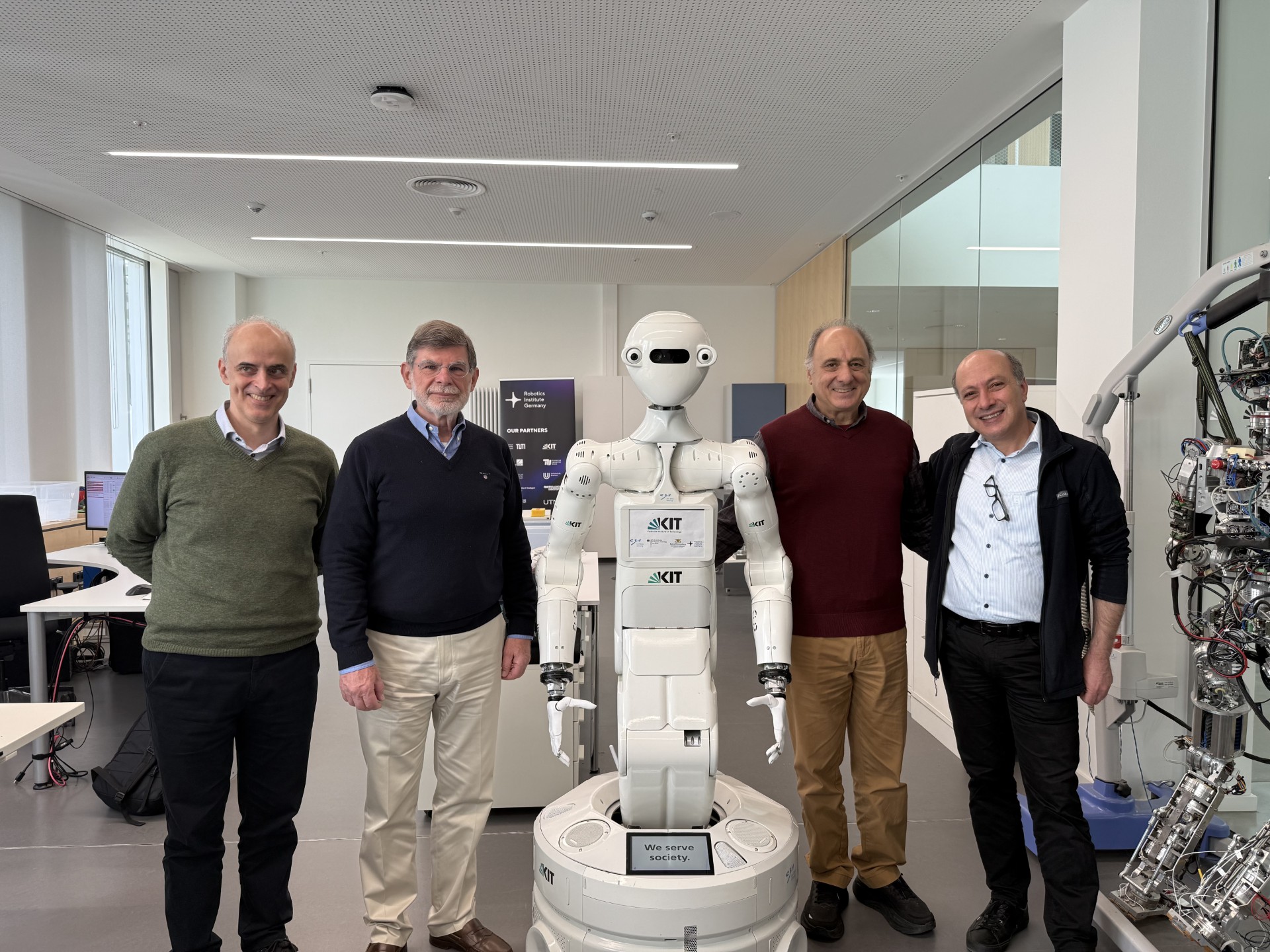
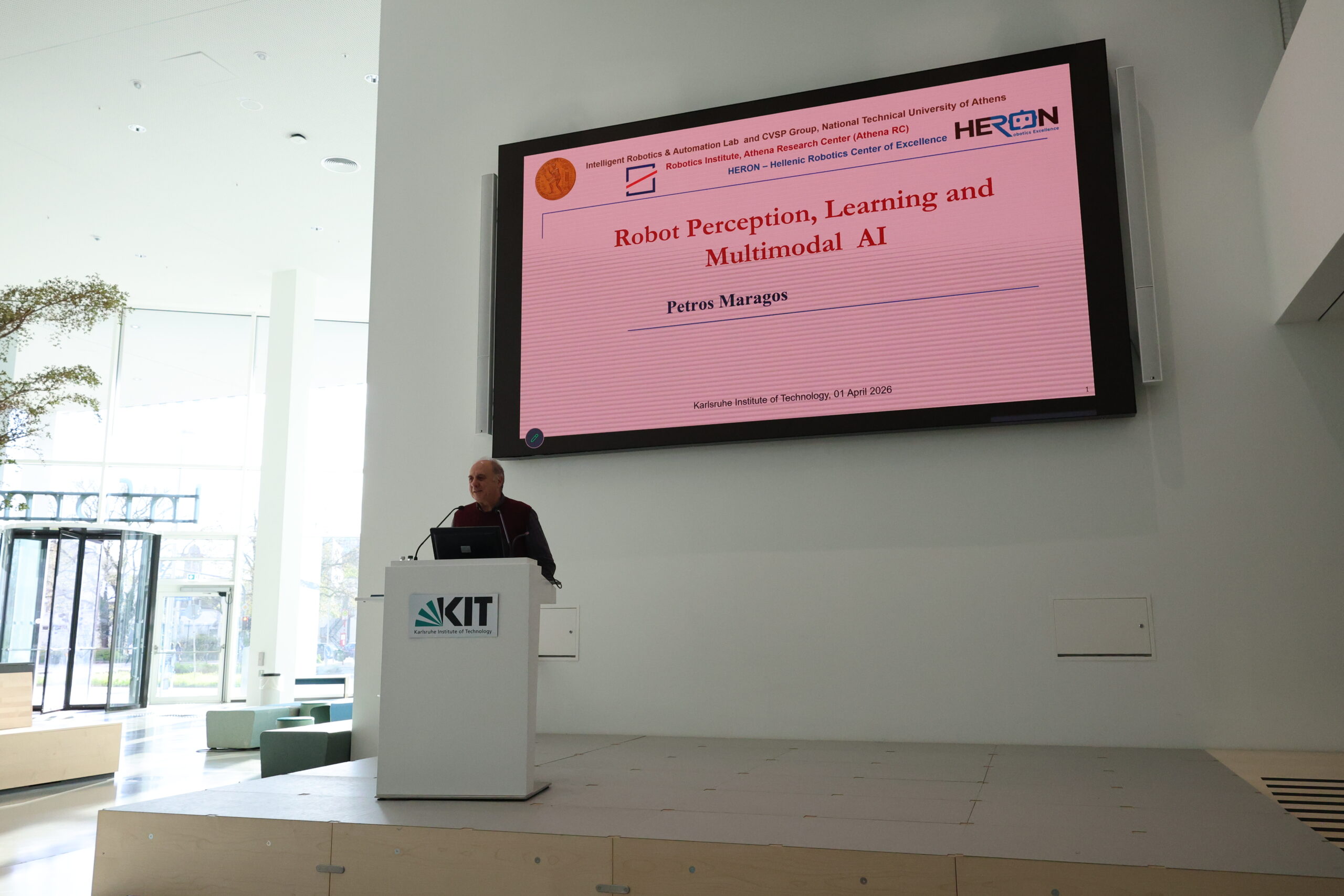
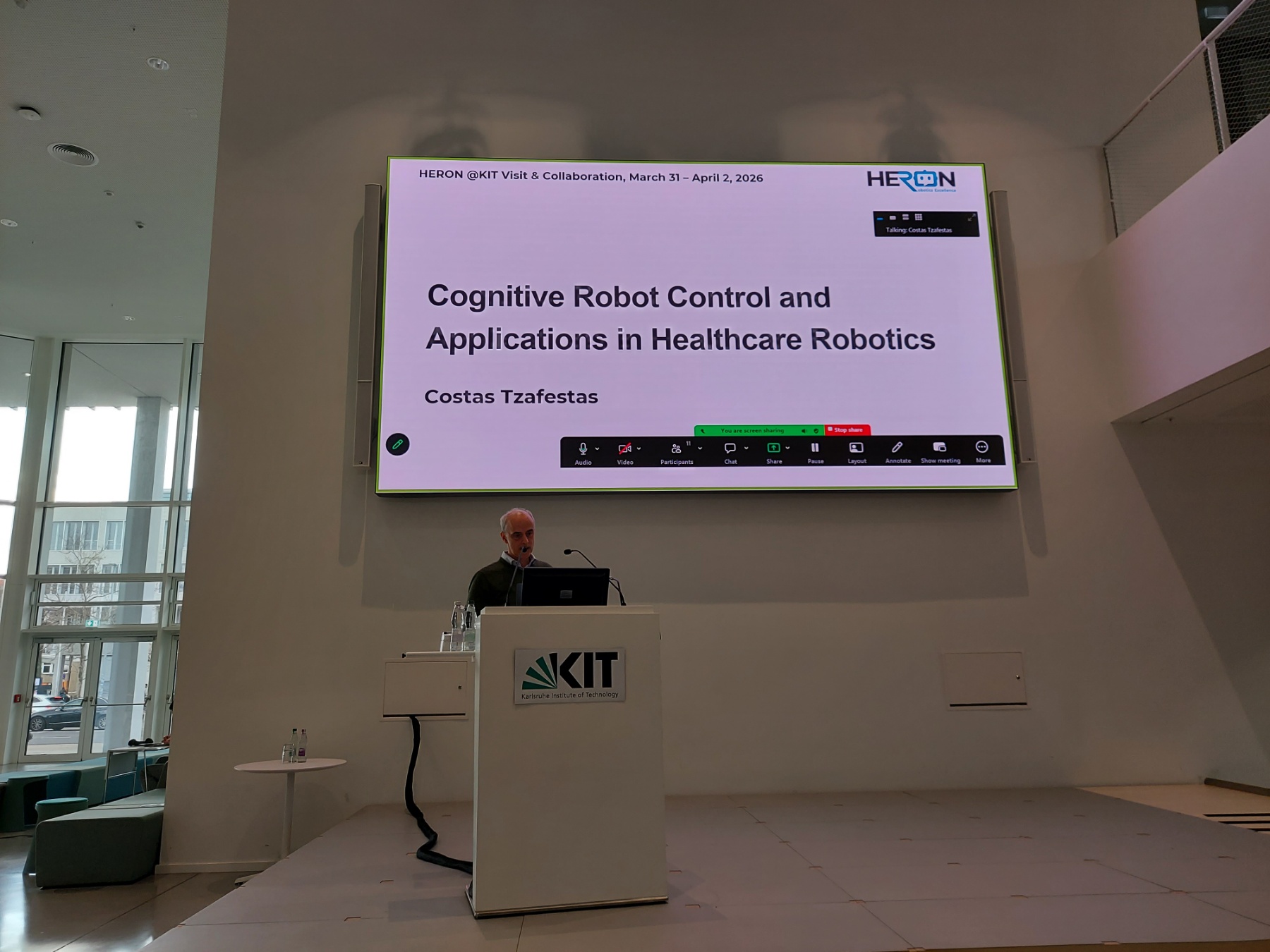
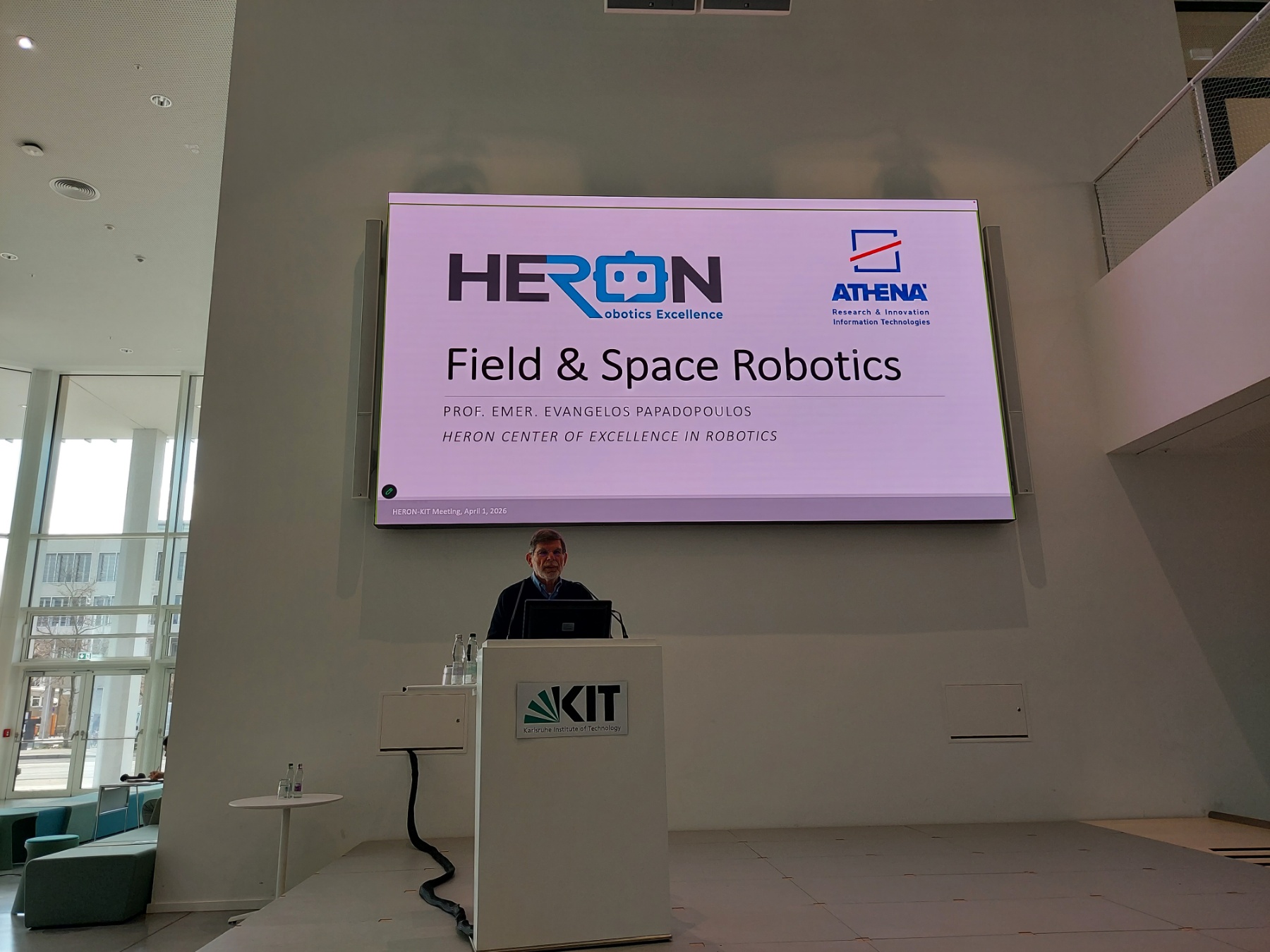
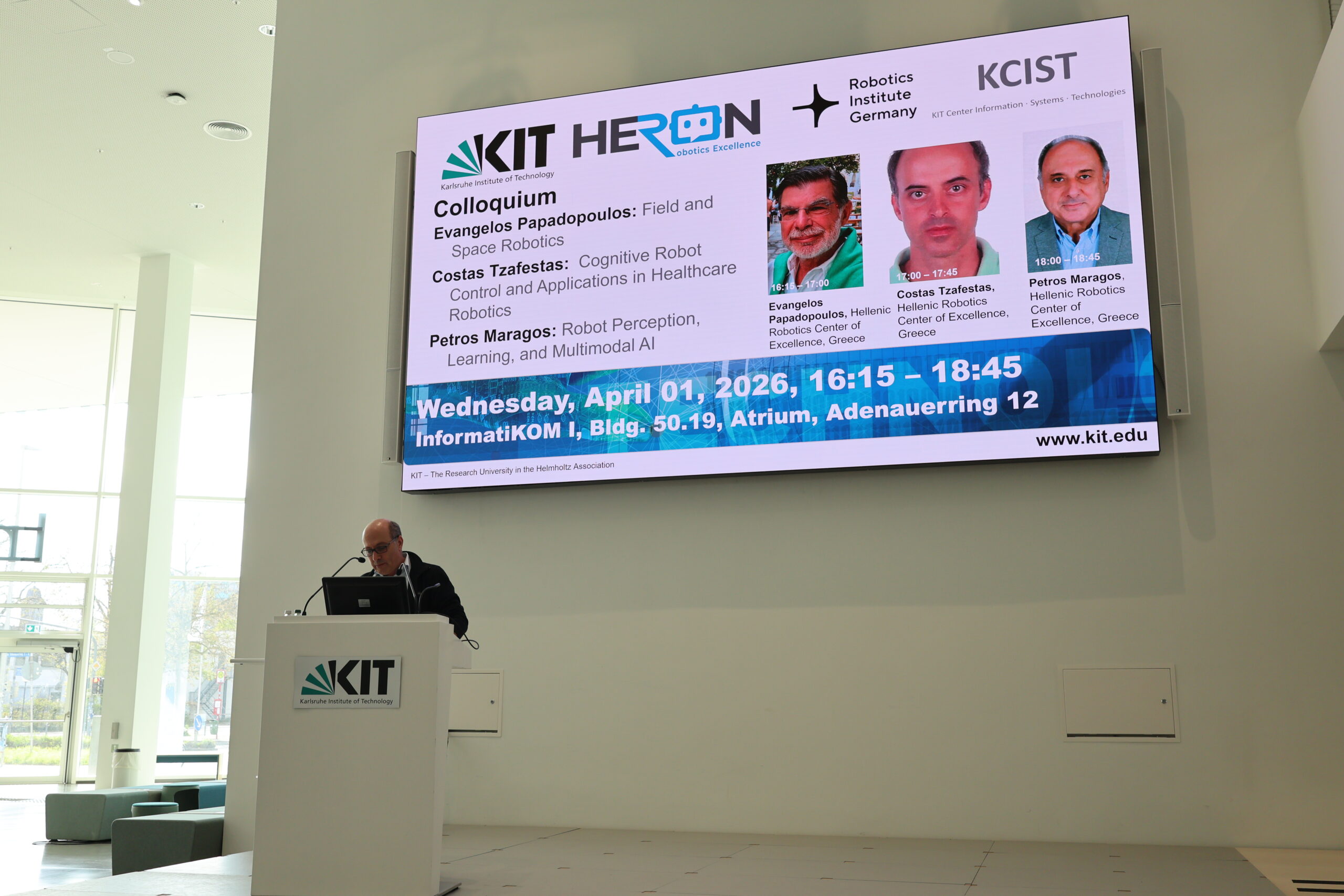
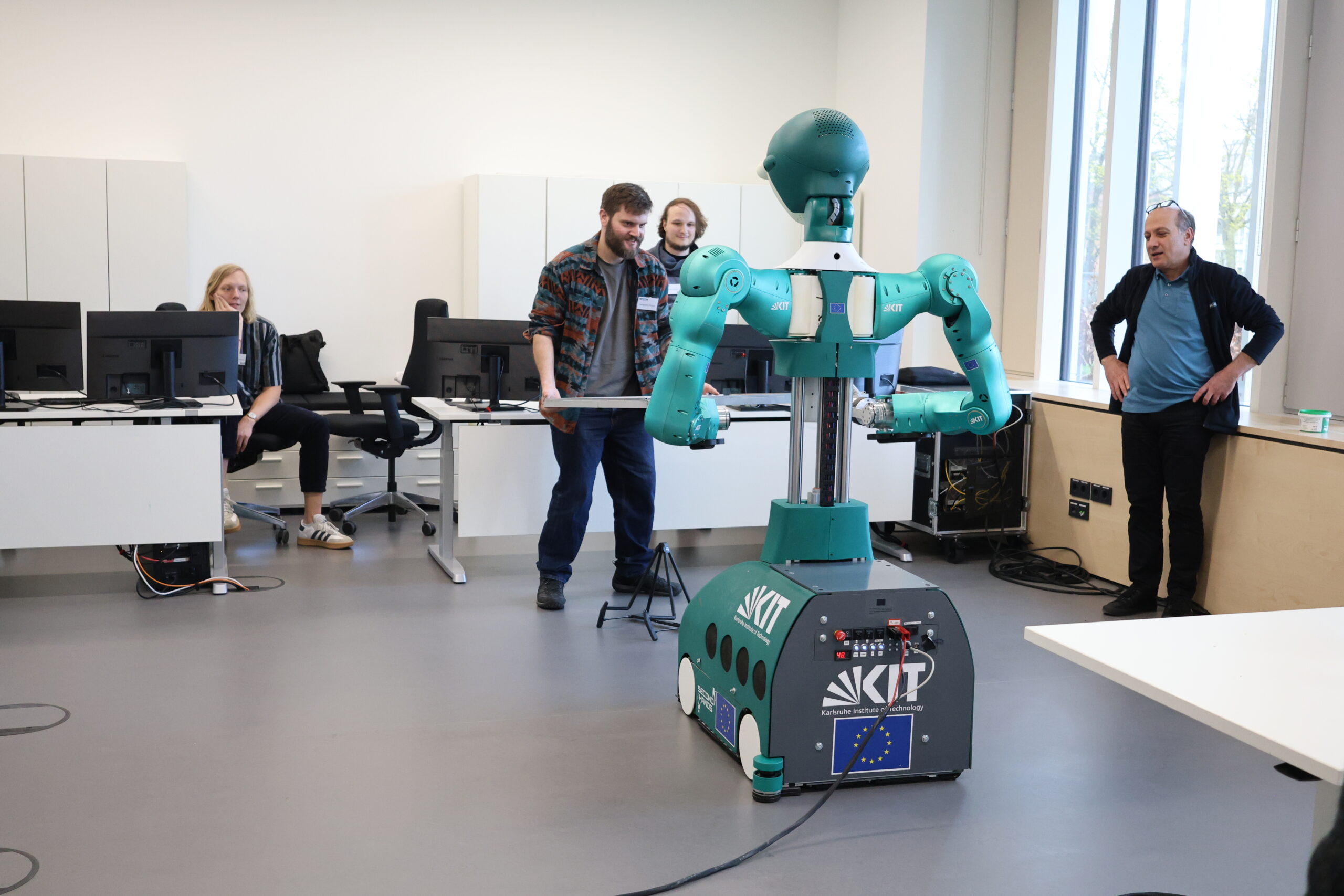
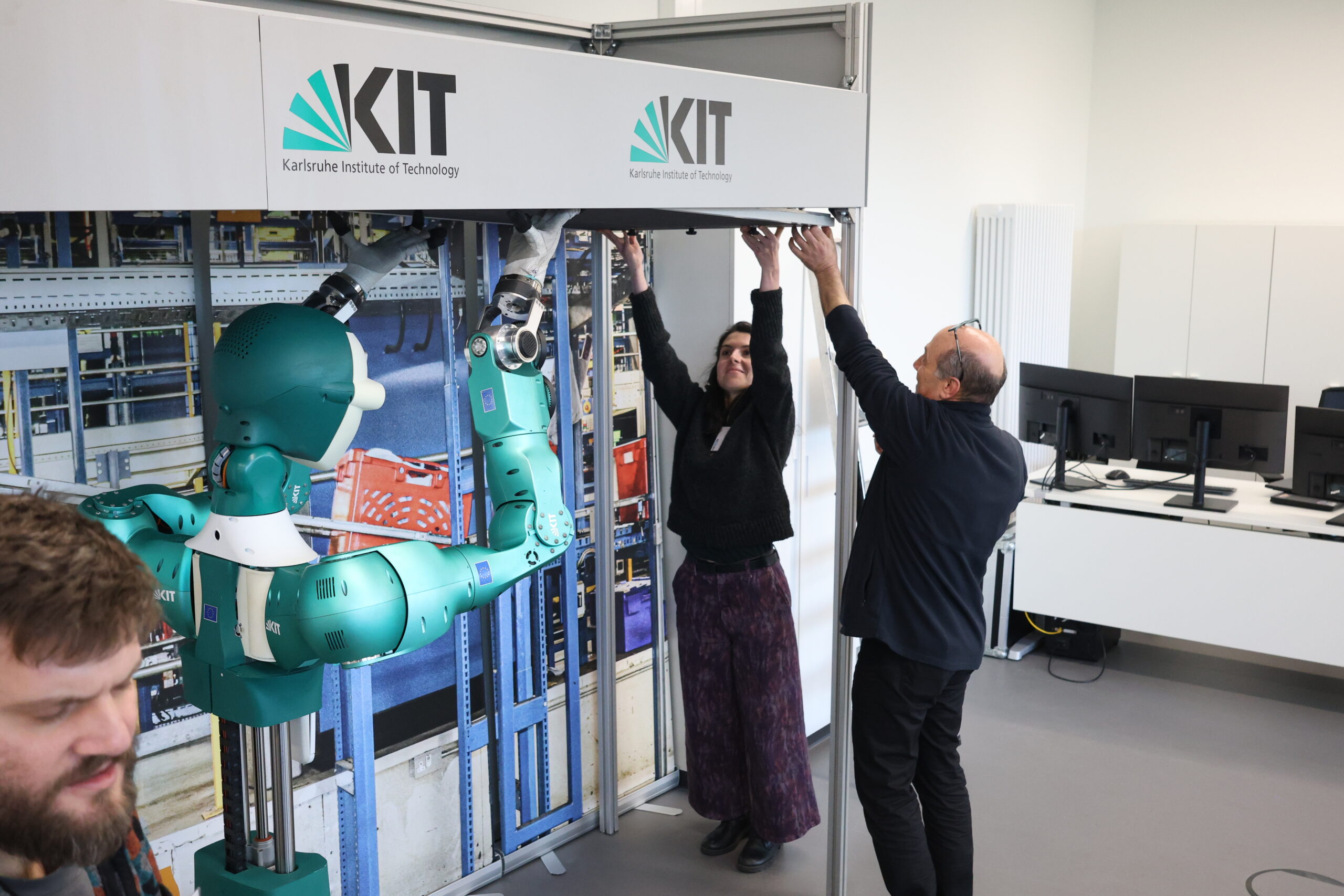
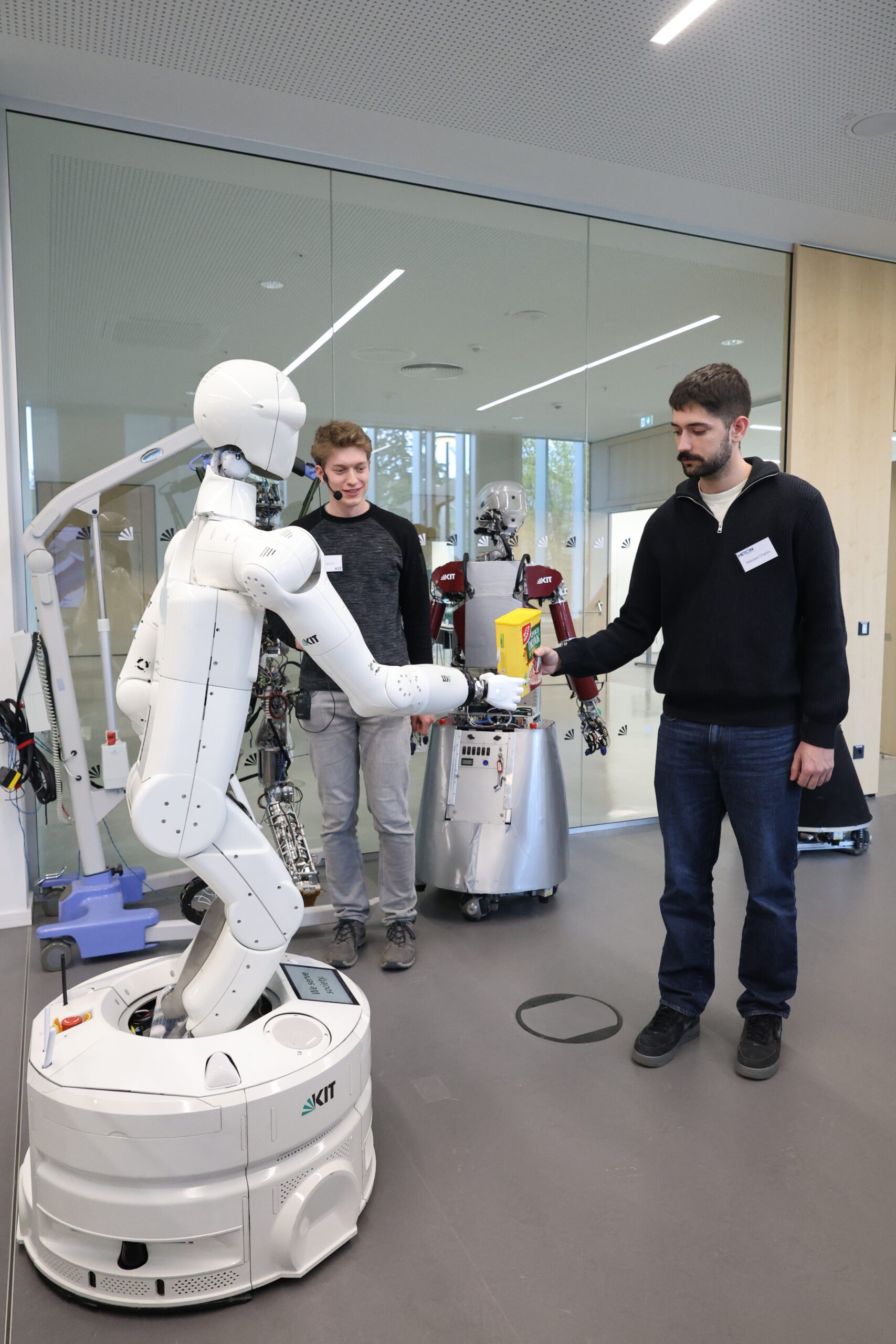
The program also included demonstrations and technical showcases of systems developed at KIT’s High-Performance Humanoid Technologies (H2T) Laboratory. The visit further featured a joint KCIST-RIG-HERON Colloquium, streamed online to members of both networks, in which three HERON senior researchers delivered invited talks. Prof. Petros Maragos presented ongoing work on multimodal perception and learning for human-robot interaction and human activity recognition, covering computer vision, audio-visual processing, multi-sensory information fusion, and machine learning, with emphasis on applications in assistive and social robotics. Prof. Evangelos Papadopoulos gave an overview of recent advances in field and space robotics, spanning legged systems, biomechatronics, space robotics, and control of such robotic systems. Prof. Costas Tzafestas presented research on cognitive robot control and its applications in healthcare robotics, addressing 5G-enabled surgical telerobotics with shared control and haptic feedback, surgical gesture recognition and skill modeling, and assistive navigation systems for users with motor and cognitive impairments. Taken together, these talks offered a broad view of HERON’s research directions and served as a productive basis for identifying shared interests with KIT. The meeting concluded with feedback sessions and the definition of action items. The teams outlined the next steps, identified opportunities for implementation, and discussed pathways toward future collaboration, including setting up the KIT-HERON Joint Lab and potential proof-of-concept developments.
In addition, the program included social and networking activities such as a lab tour, a field trip, and joint dinners, which played an important role in strengthening relationships between the participants.
Overall, the HERON @ KIT meeting was a productive and engaging experience, successfully combining scientific exchange with meaningful collaboration. The outcomes of this visit are expected to contribute to the current and future activities of the HERON project, one of the objectives of which is the establishment of a joint KIT – HERON robotics laboratory.


 30 Apr 2026