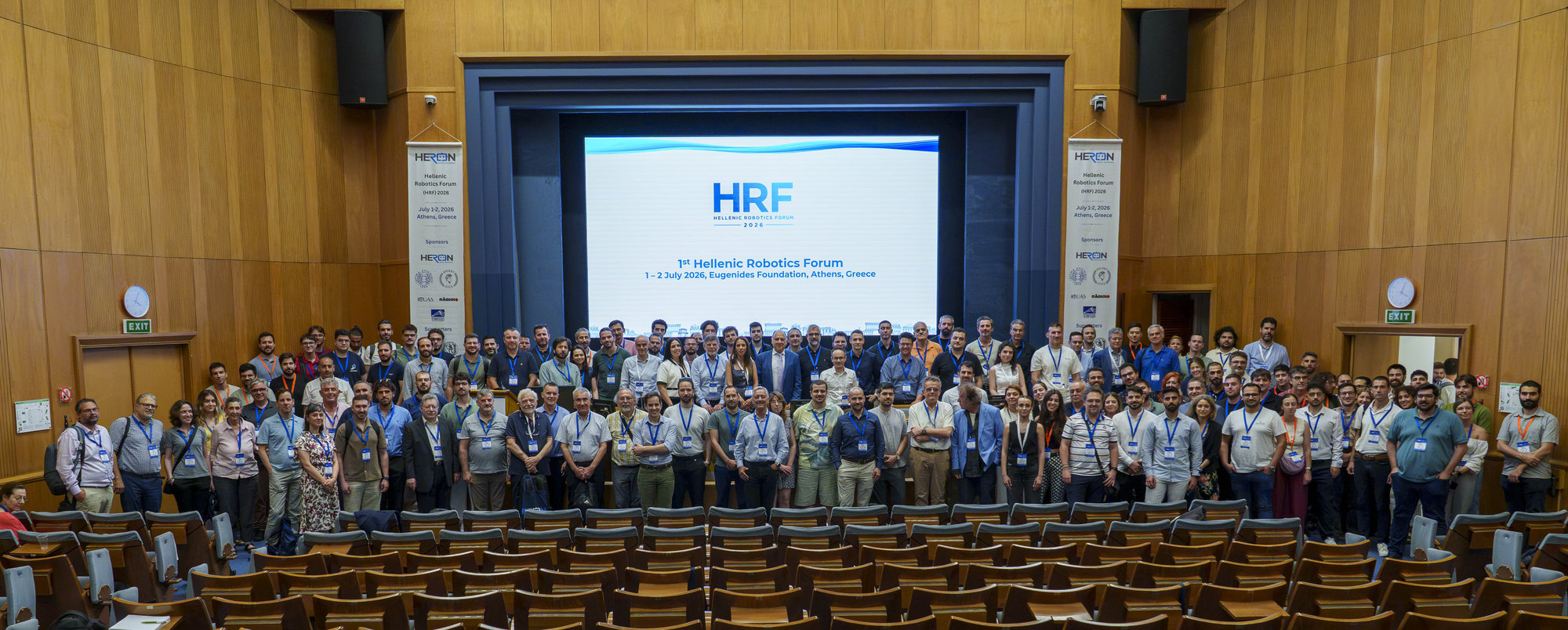
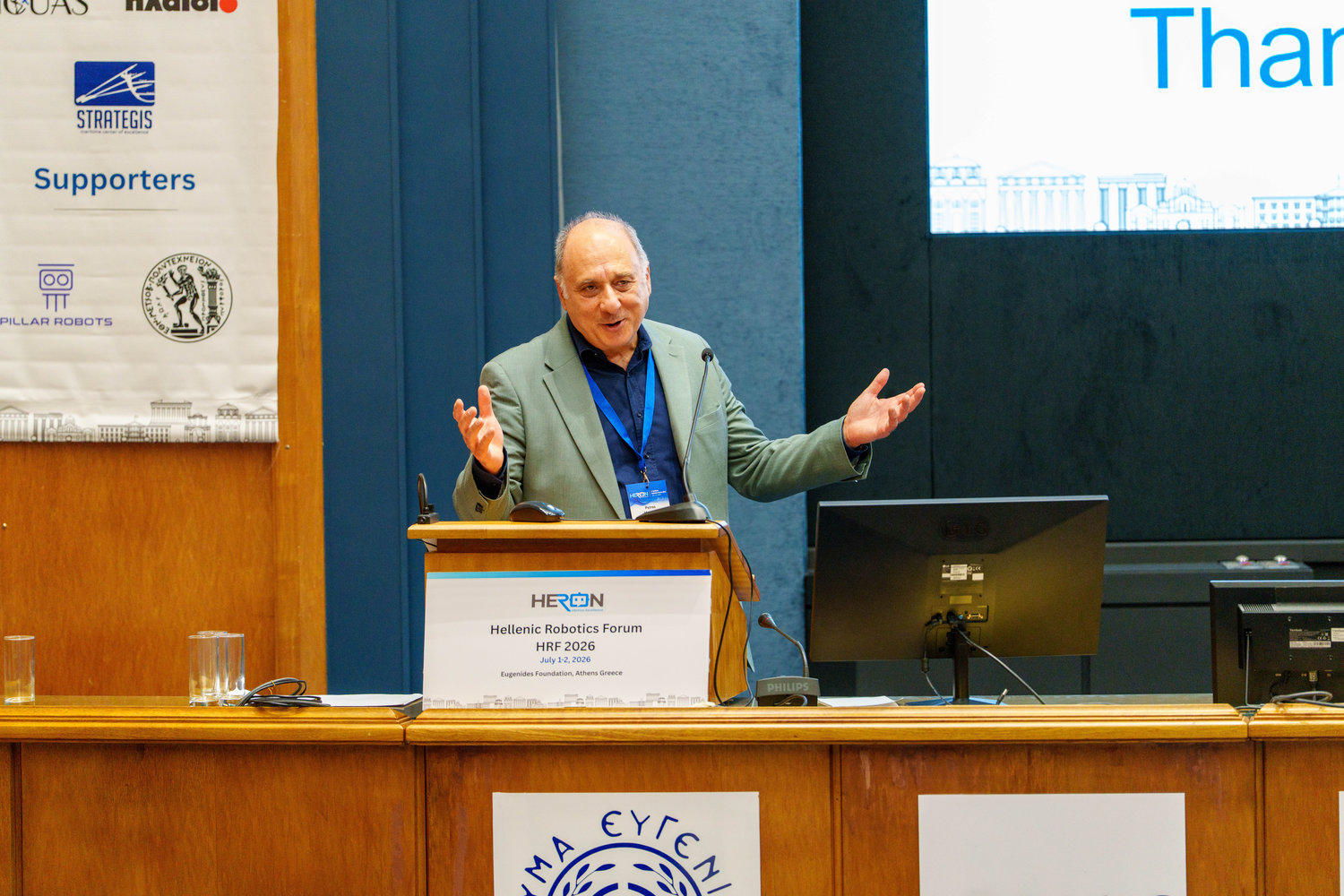
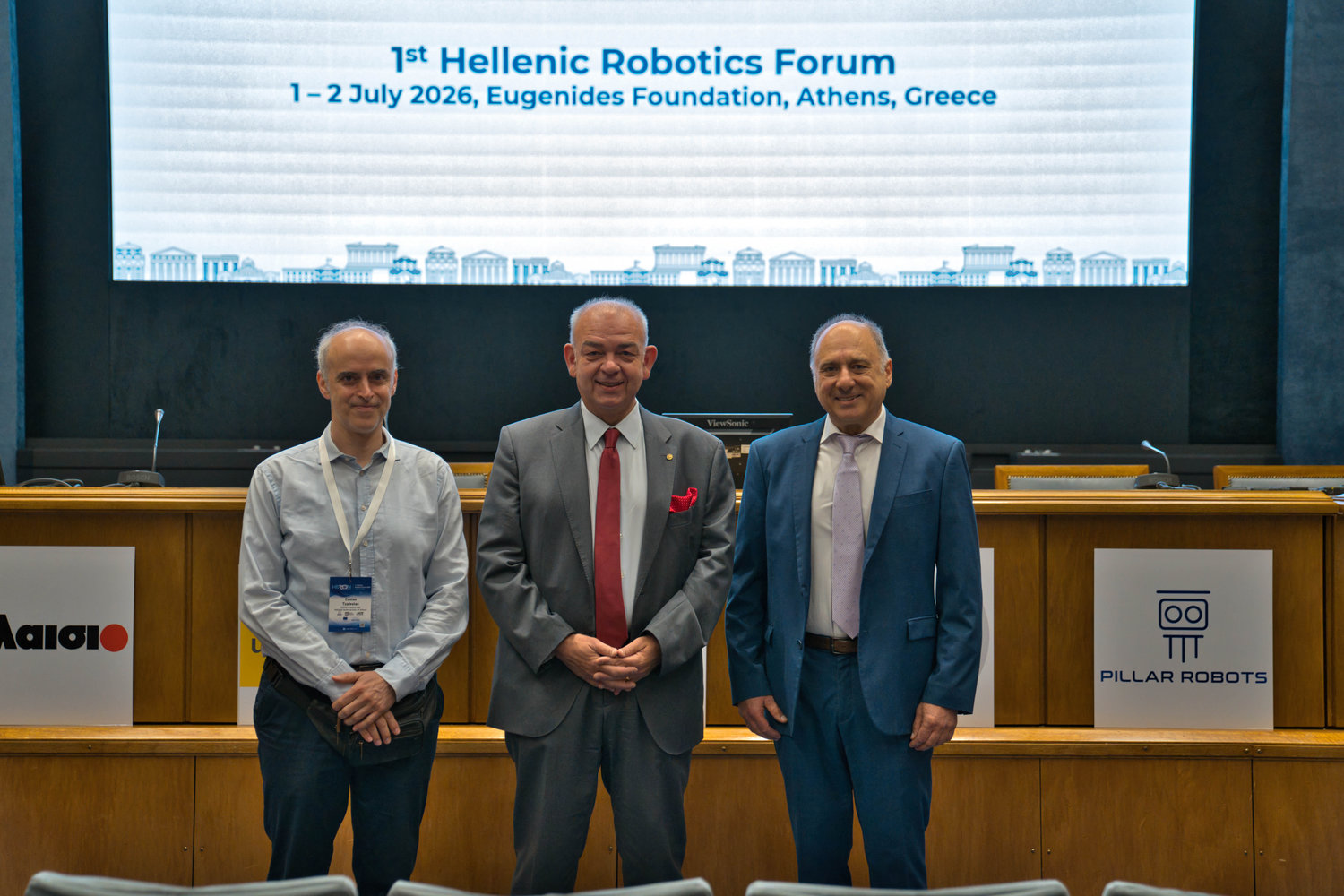
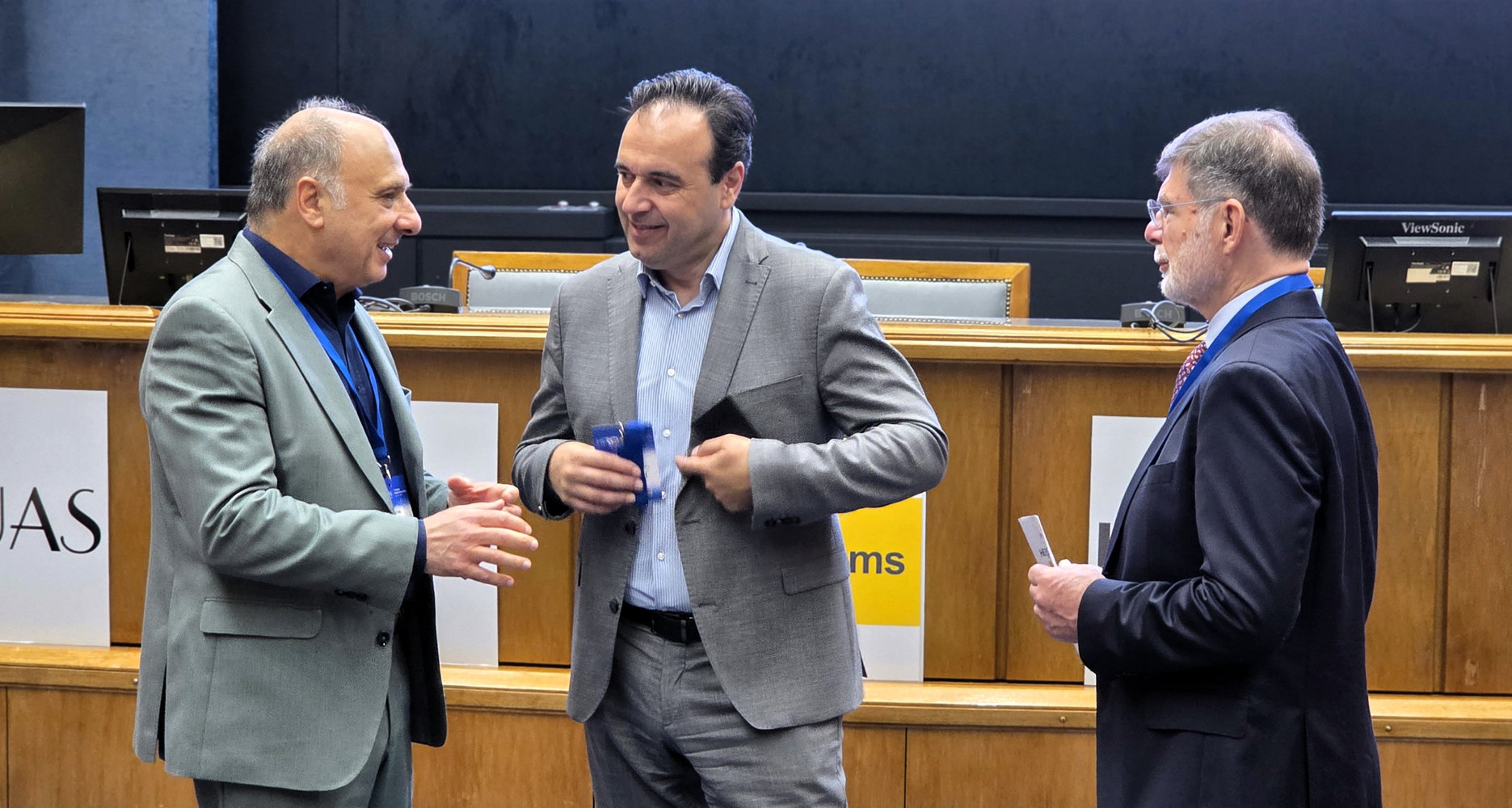
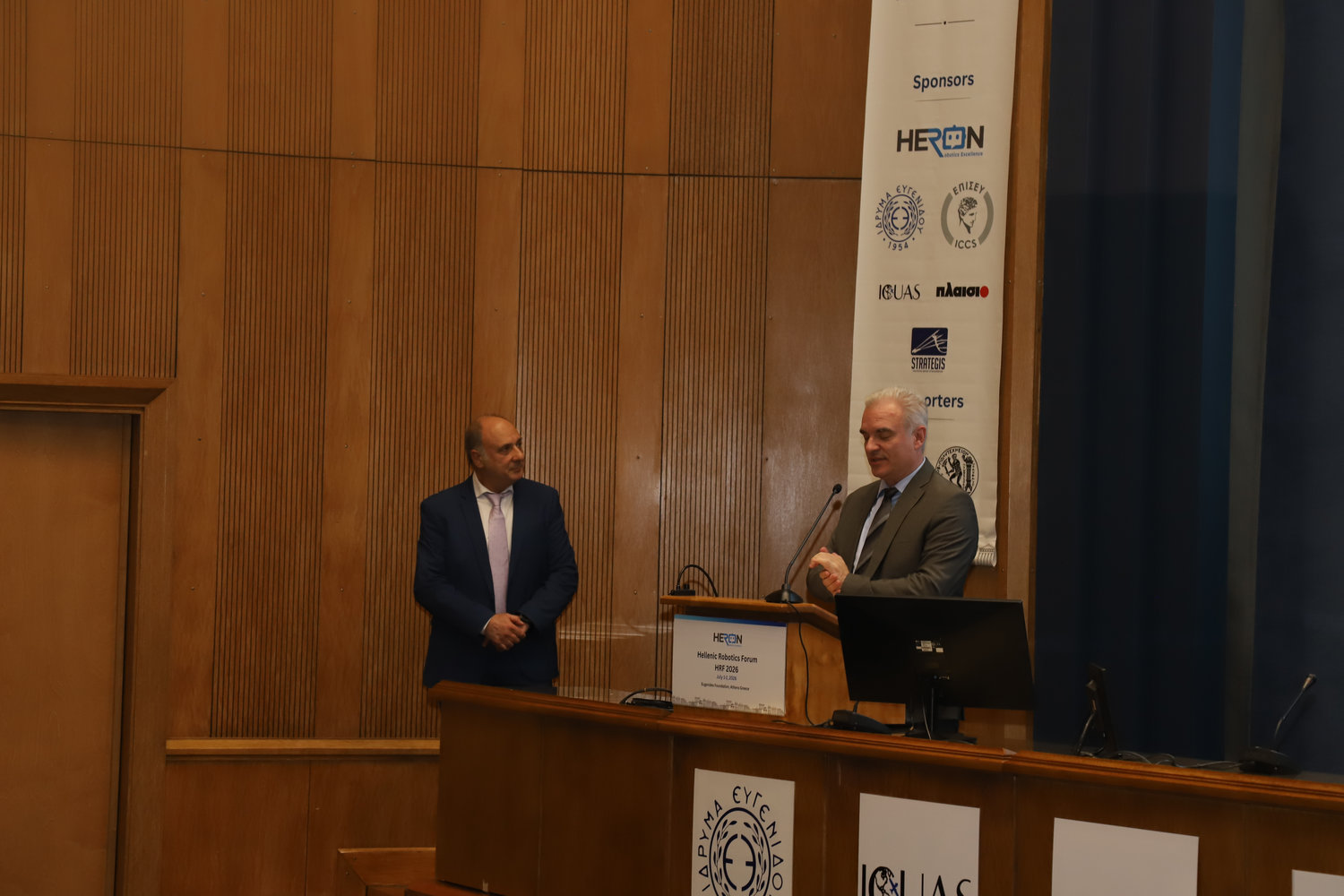
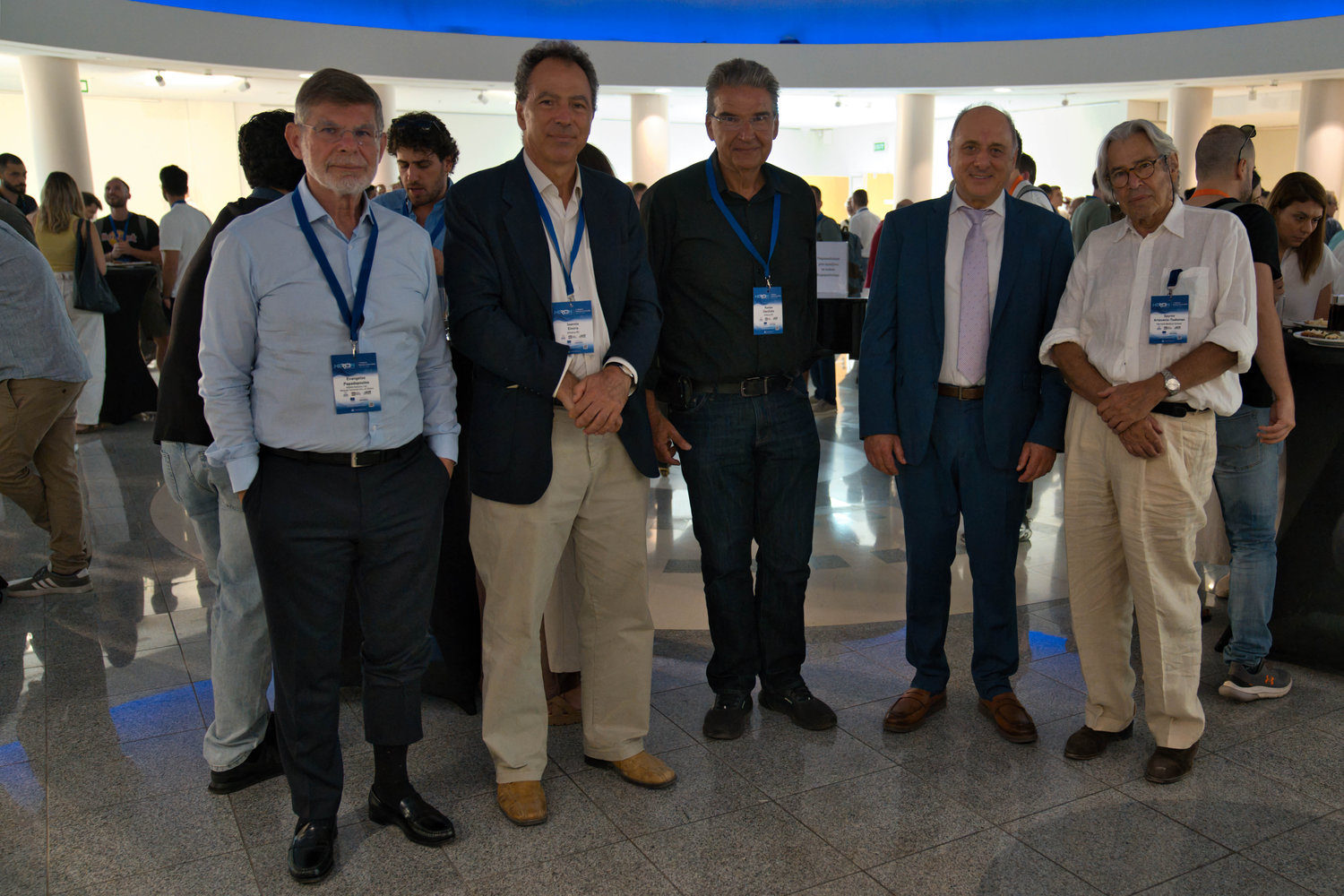
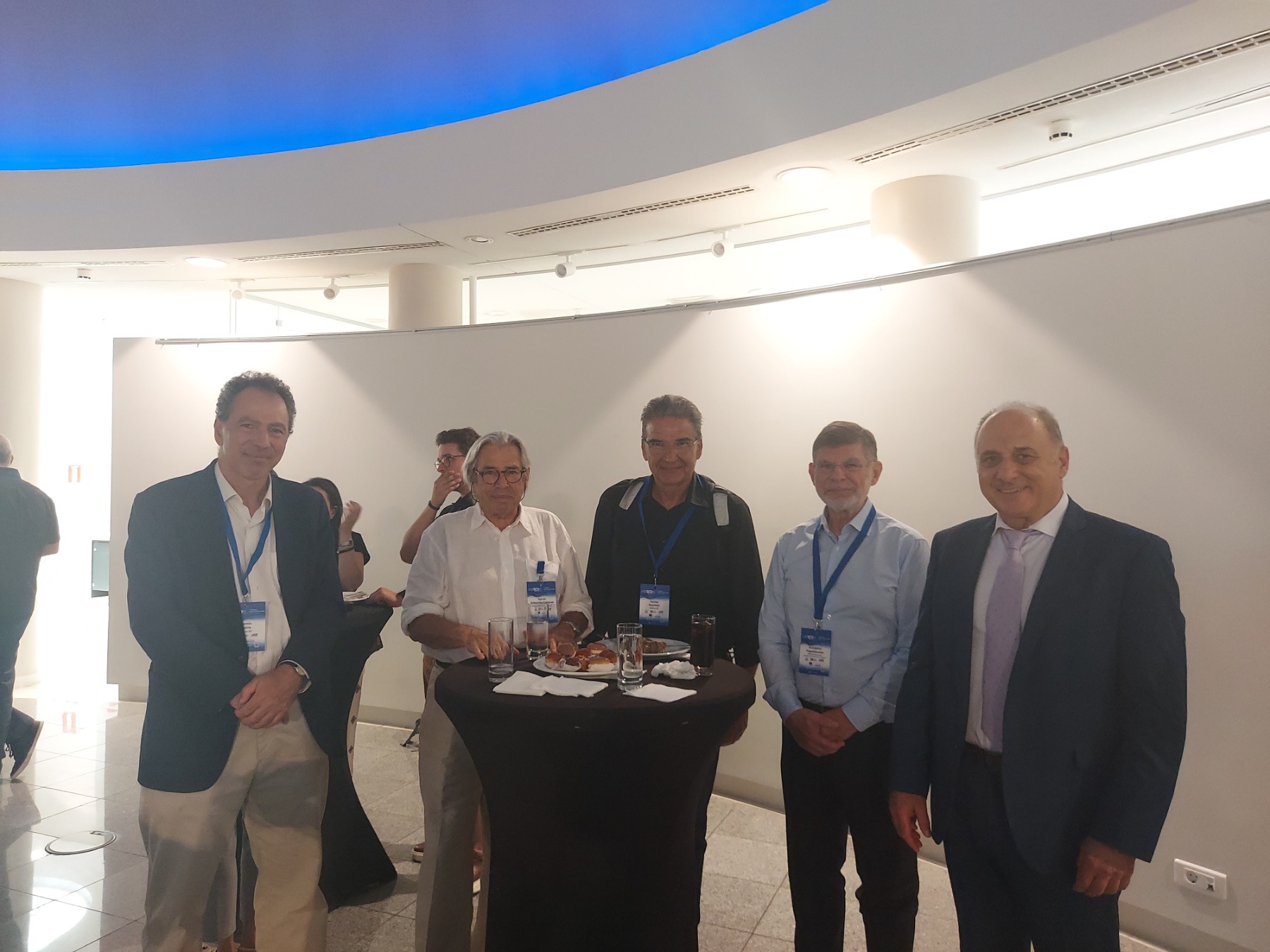
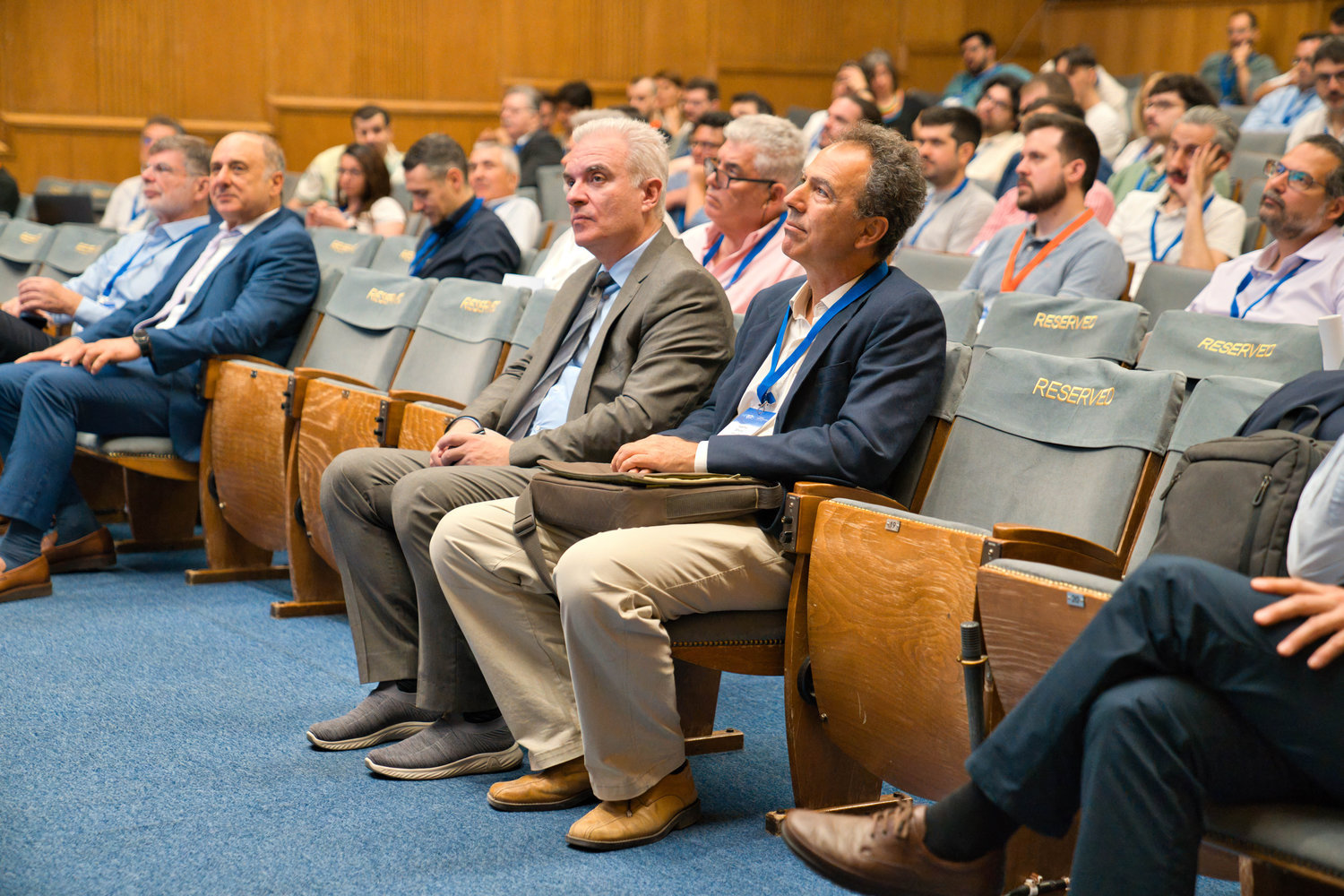
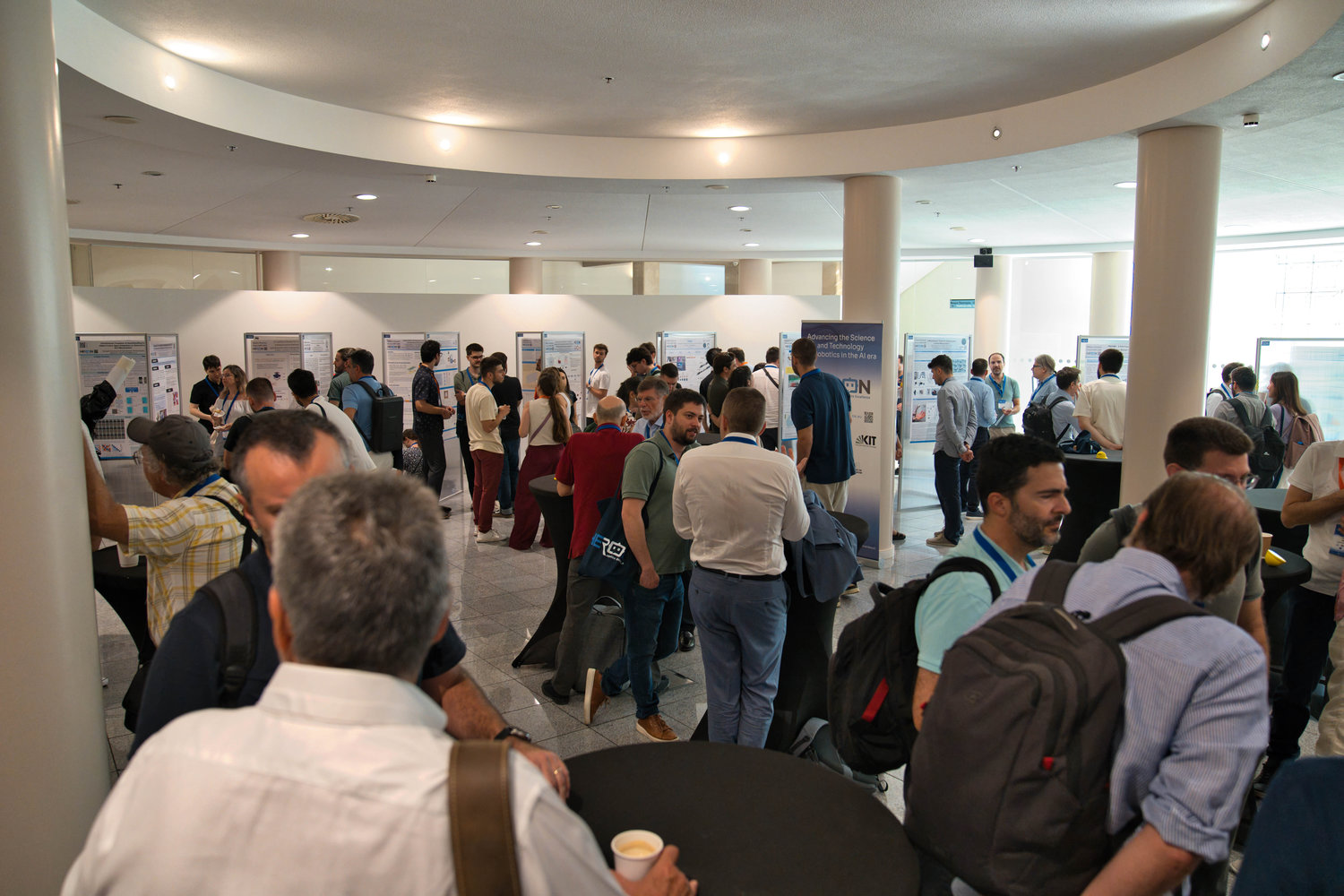
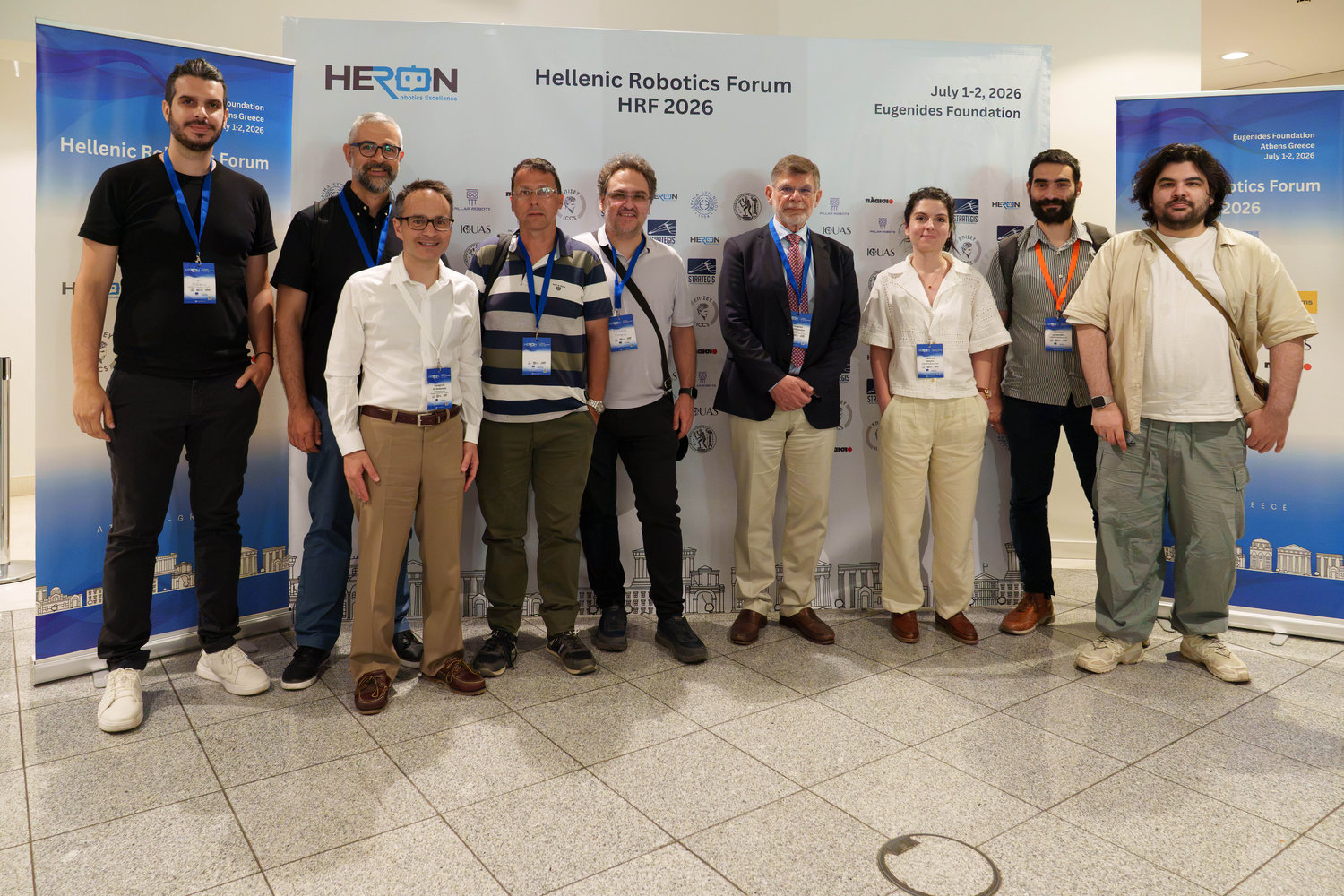
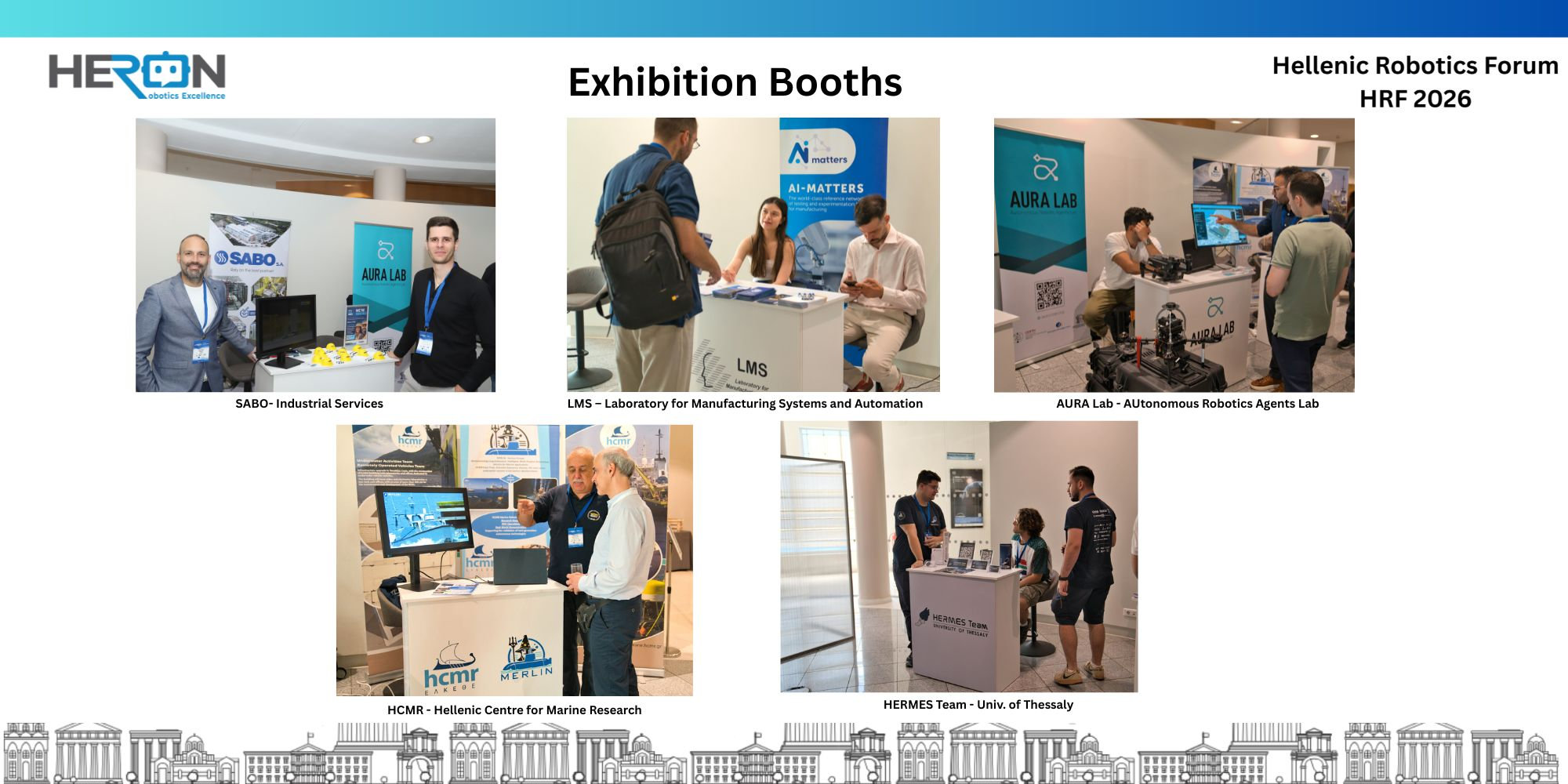
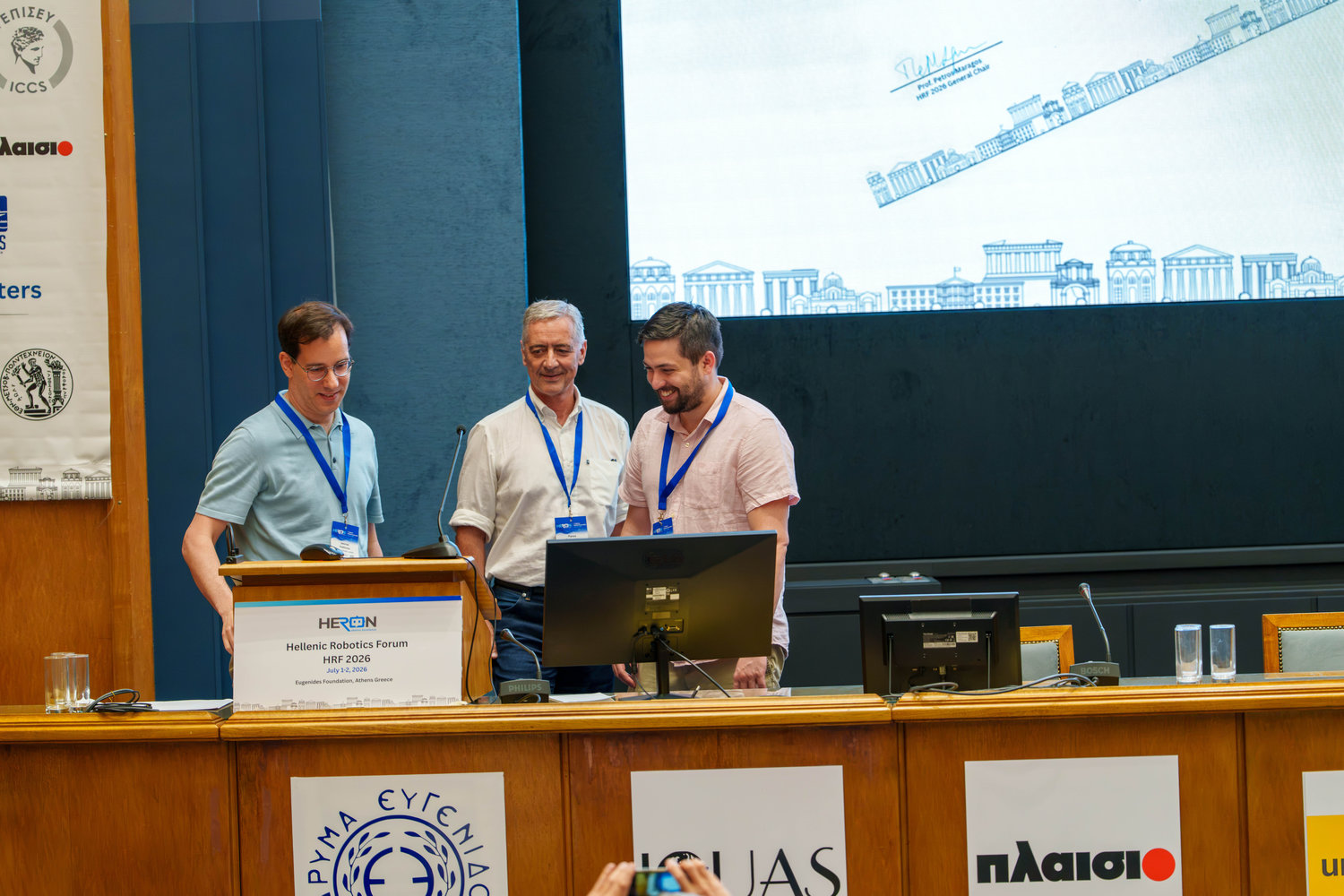
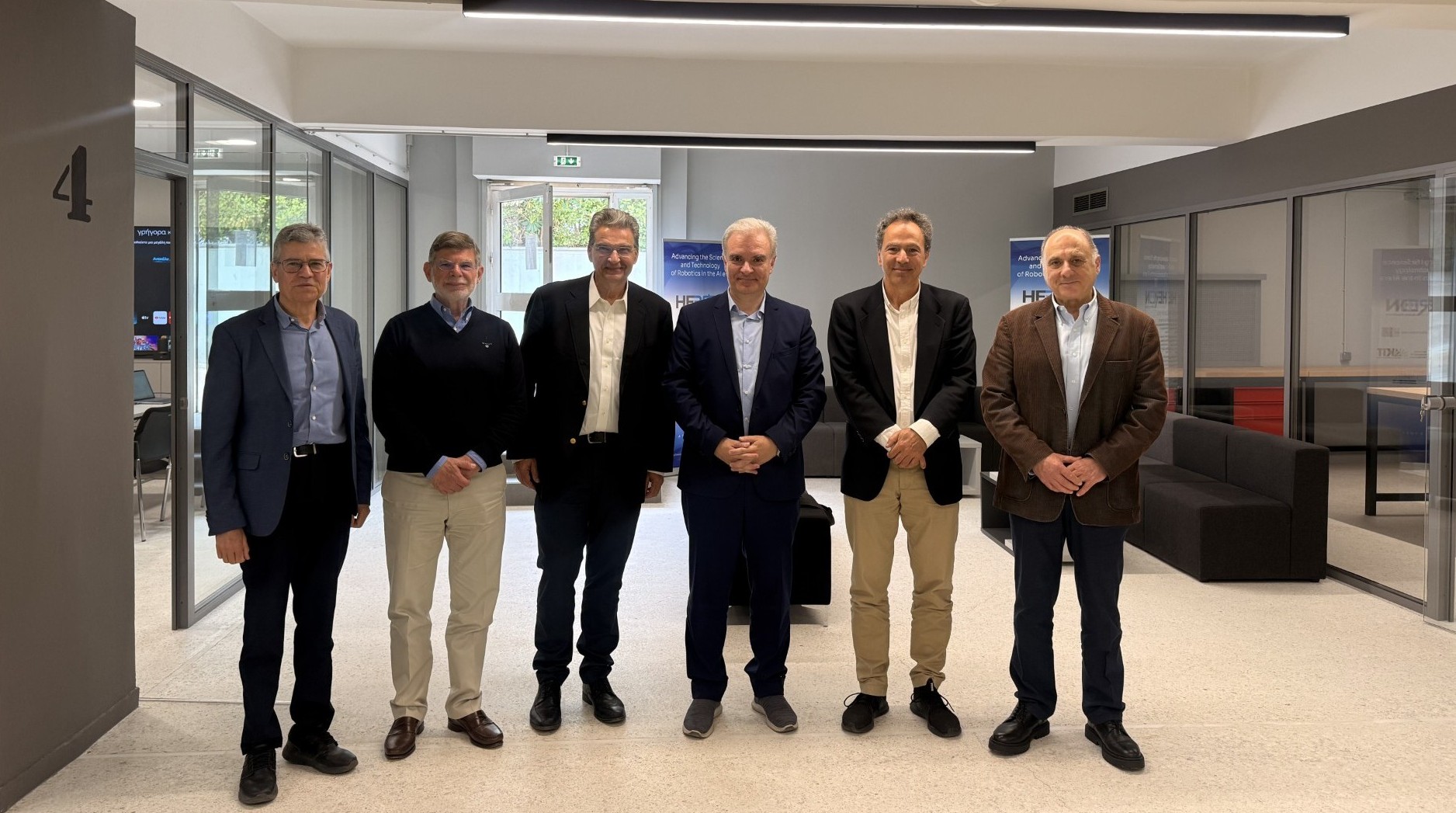
The Hellenic Robotics Forum (HRF) 2026 took place on 1-2 July 2026 at the iconic building of the Eugenides Foundation in Athens. It proved to be a highly successful event that brought together a large part of the Hellenic robotics and AI communities by providing a platform for presenting the latest research findings in robotics, AI, and autonomous systems. These advances are expected to have a considerable impact in the years to come and will help shape the future of robotics and AI.
The General Chairs, Prof. Petros Maragos (HERON and NTUA), Prof. Evangelos Papadopoulos (HERON and NTUA), and Prof. Costas Tzafestas (NTUA and HERON), assisted by an outstanding HRF Organizing Committee, organized a two-day scientific event featuring an innovative technical program with more than 110 posters and over 30 spotlight presentations. The program covered a wide spectrum of topics in robotics and AI, including field and space robotics, healthcare and social robotics, marine and maritime robotics, safety and security robotics, multimodal robot perception, human-robot interaction, and AI and machine learning for robotics.
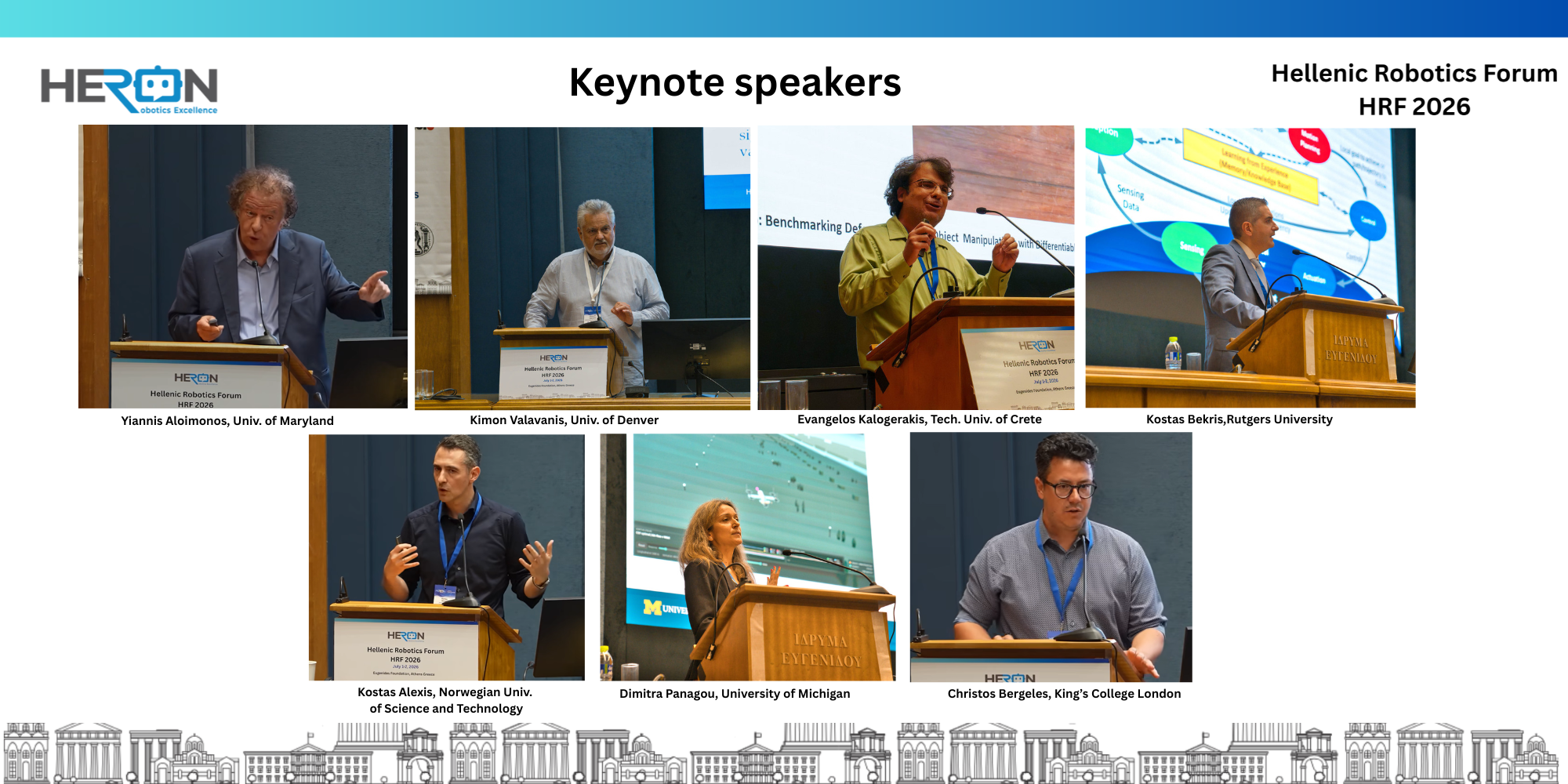
The Hellenic Robotics Forum also gave attendees the unique opportunity to hear keynote talks by seven leading researchers, who presented cutting-edge research findings in robotics and AI. Prof. Kostas Bekris of Rutgers University talked about “Robotics AI: Integrating Learning, Modelling, Perception and Planning”, exploring the key ingredients required to develop effective and robust robotics AI solutions. The second keynote talk was delivered by Prof. Dimitra Panagou of the University of Michigan who discussed the concept of “Reliable and Resilient Robot Autonomy”, and the third one by Prof. Christos Bergeles of King’s College London, who talked about “Robot Learning in Minimally Invasive Surgery and Micro-Manipulation”. Prof. Kostas Alexis of the Norwegian University of Science and Technology closed the keynote talks program of the first day by discussing “Unified Autonomy across Robot Embodiments”. The second day of keynote talks opened with Prof. Yiannis Aloimonos of the University of Maryland, who captured the audience’s attention by presenting the topic of the “Sensorimotor Path to AI”. The next keynote talk was delivered by Prof. Evangelos Kalogerakis of the Technical University of Crete, who highlighted the latest advances in “4D-Aware Generative AI: Creating Dynamic, Interactive 3D Worlds for Robotics”. Prof. Kimon Valavanis of the University of Denver gave the closing keynote talk and outlined the “Challenges in Unmanned Aircraft Systems: from Navigation Control to Integration into the National Airspace”.
In addition, the HRF 2026 spotlight and poster presentations served as a vibrant showcase for over 110 state-of-the-art research works. Their content can be found Spanning key domains—including medical robotics, field and space operations, maritime systems, robot perception, and AI-driven control—these sessions efficiently condensed peer-reviewed breakthroughs into highly engaging, digestible formats. The organizers structured these presentations to spark dynamic dialogues, connecting academia, industry, and the international diaspora. By prioritizing rapid spotlight talks and interactive posters, HRF 2026 provided an invaluable platform for emerging researchers to gain visibility while actively driving technological innovation across the Hellenic robotics ecosystem.
The HRF 2026 conference material (book of posters, keynote slides, and photos) can be found here.
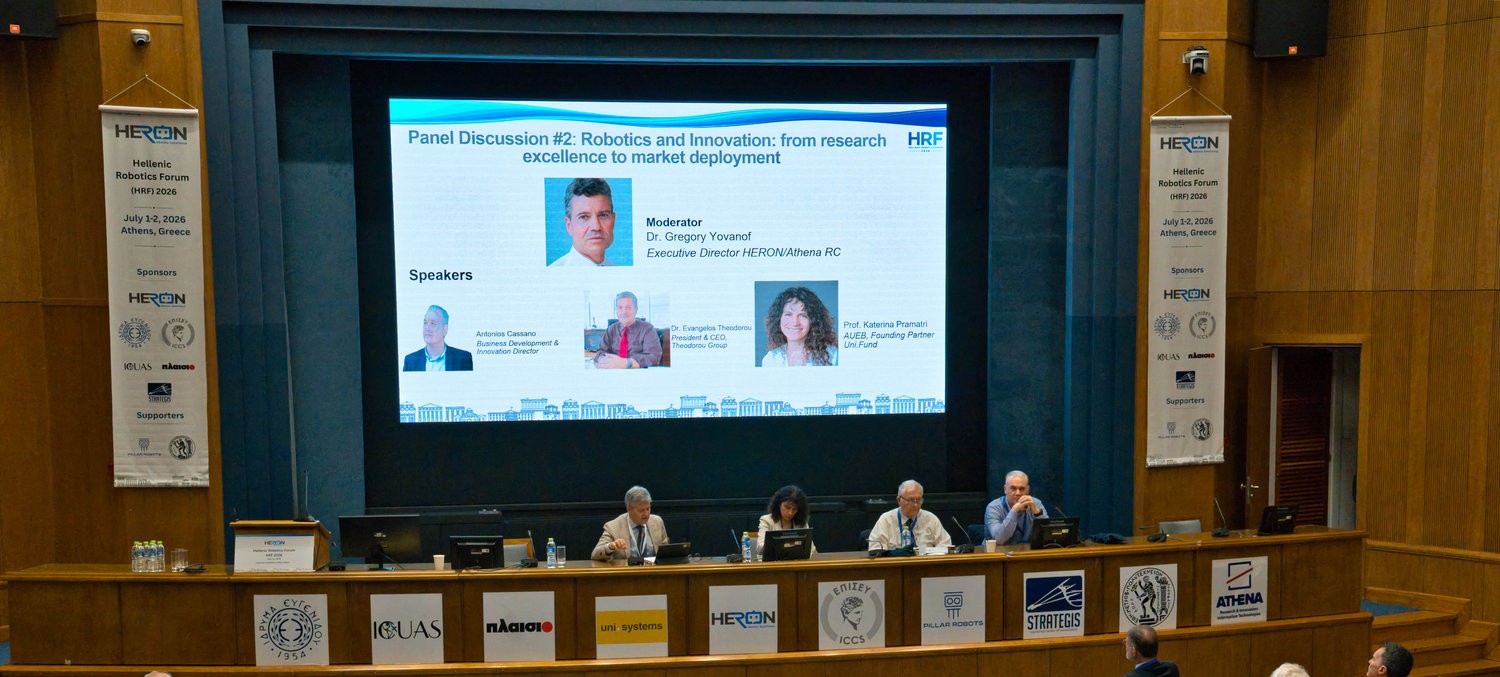
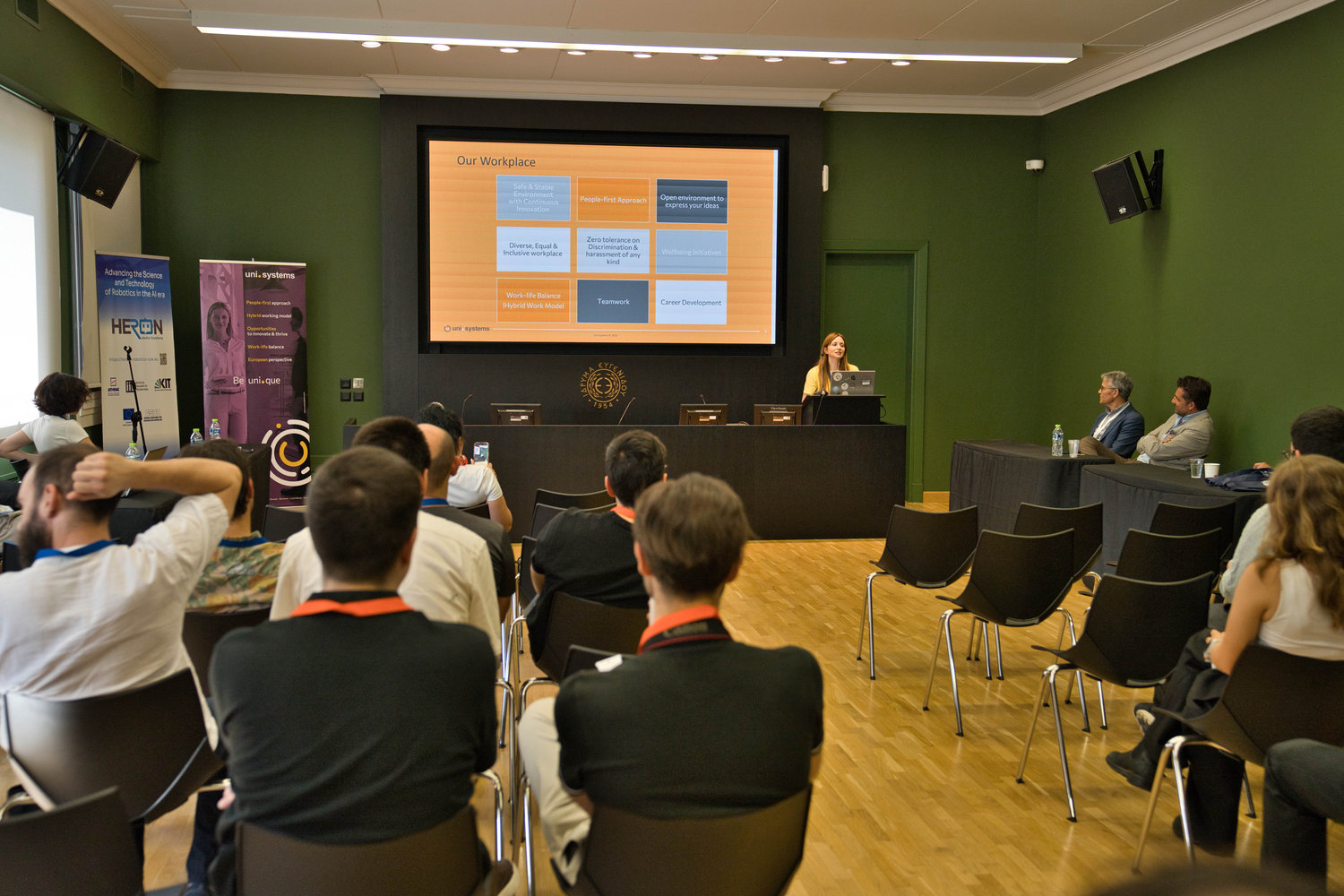
Besides its rigorous academic and technical program, the Hellenic Robotics Forum also emphasized the importance and the symbiotic relationship between academia and industry. It hosted a panel discussion titled “Robotics and Innovation: from Research Excellence to Market Deployment,” which was moderated by Executive Director Dr. Gregory Yovanof of the HERON Hellenic Robotics Center of Excellence and featured expert opinions and practical advice from company representatives from industry players UniSystems of Quest Group, Theodorou Group of Companies, and the venture capital firm UniFund. A career session parallel event also took place, where students had the opportunity to listen to short corporate presentations by company officials from UniSystems of Quest Group, Theodorou Group of Companies, INTRACOM Defence, and Maritime Technology Innovative Solutions (MTIS) which specializes in advanced maritime technologies and is a member of the QNR Group.
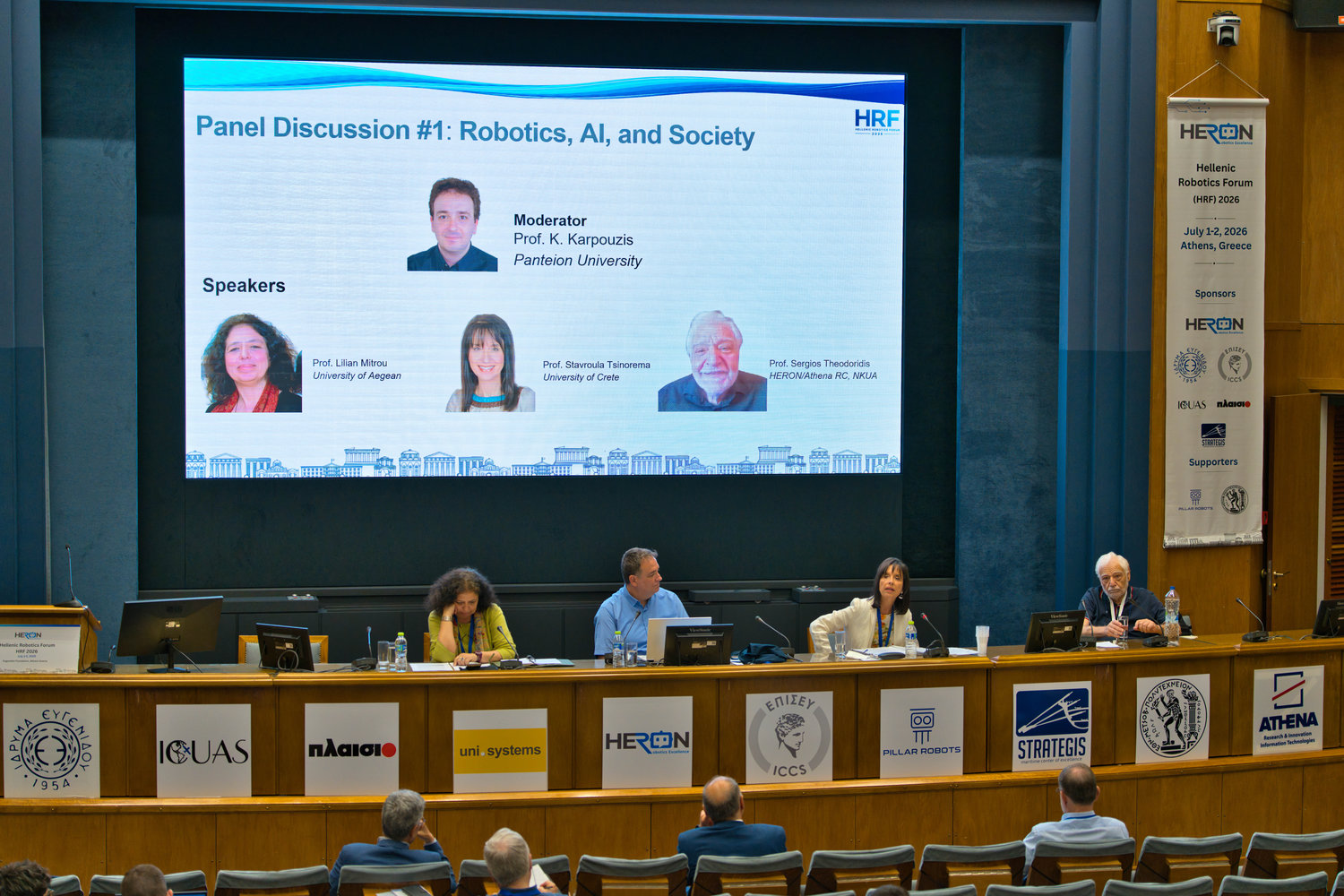
A second panel discussion also took place during the Hellenic Robotics Forum. It addressed “Robotics, AI, and Society”, which is a topic of considerable interest to the general public, academics, and robotics practitioners. The discussion covered a wide range of issues, including the widespread concern about the role and position of humans in the age of AI, the future distribution of labour, the quality of human relationships, the formation of personal identity, society’s increasing dependency on AI, the level of dependency we want to entrust to our technological creations, and the geopolitical competition for technological supremacy.
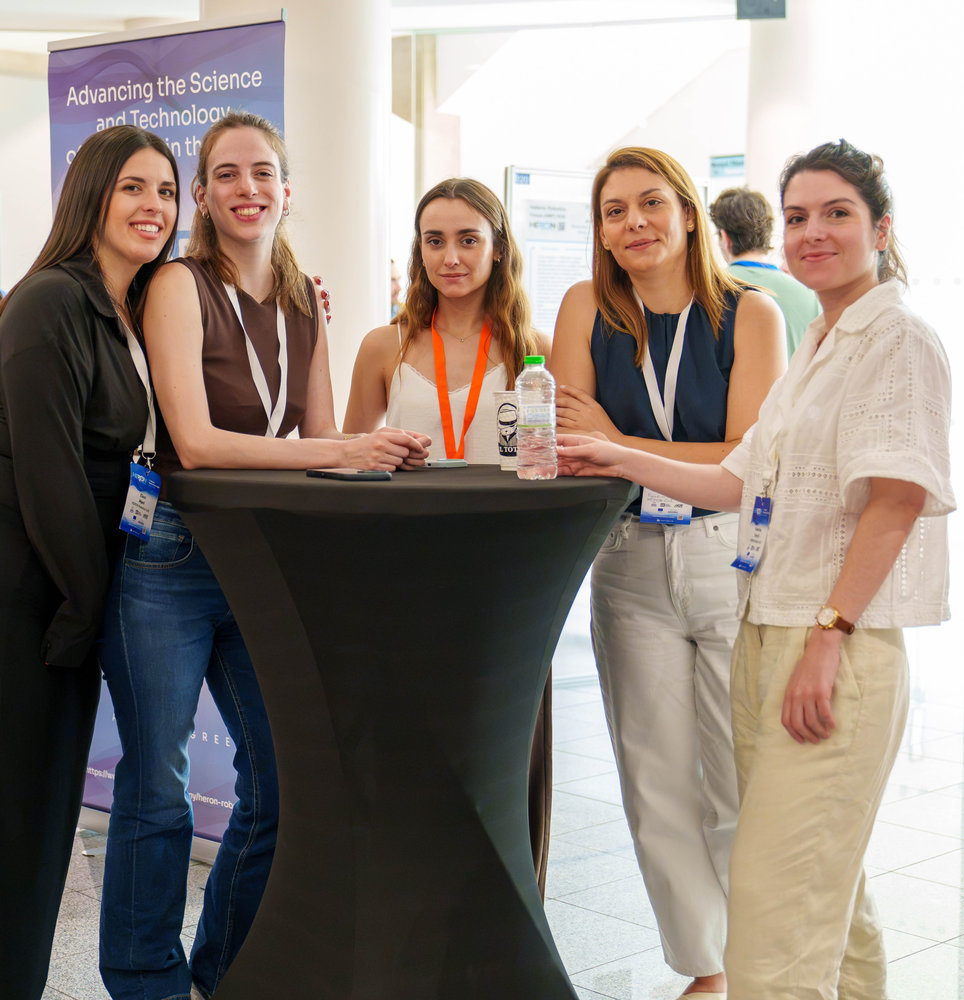
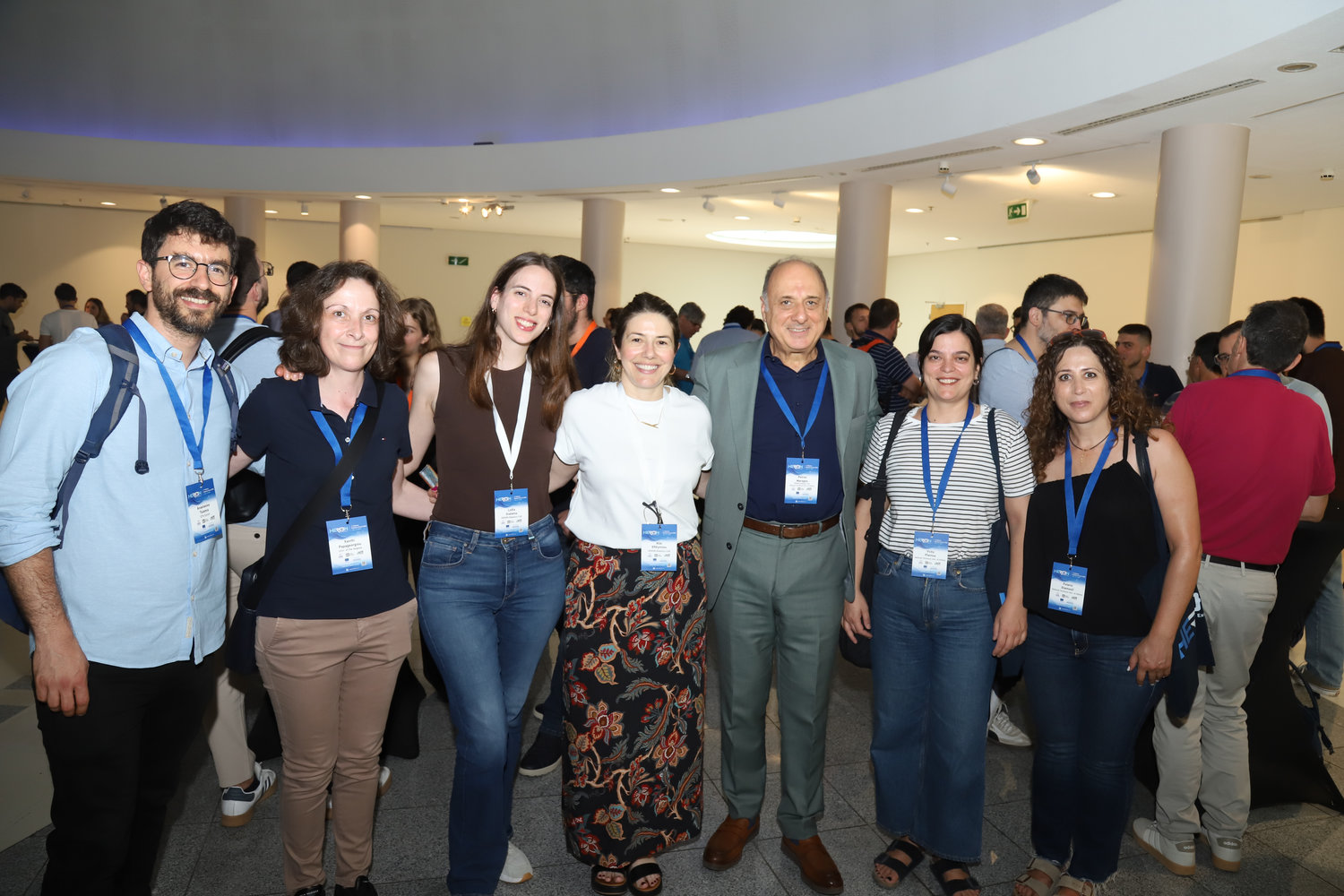
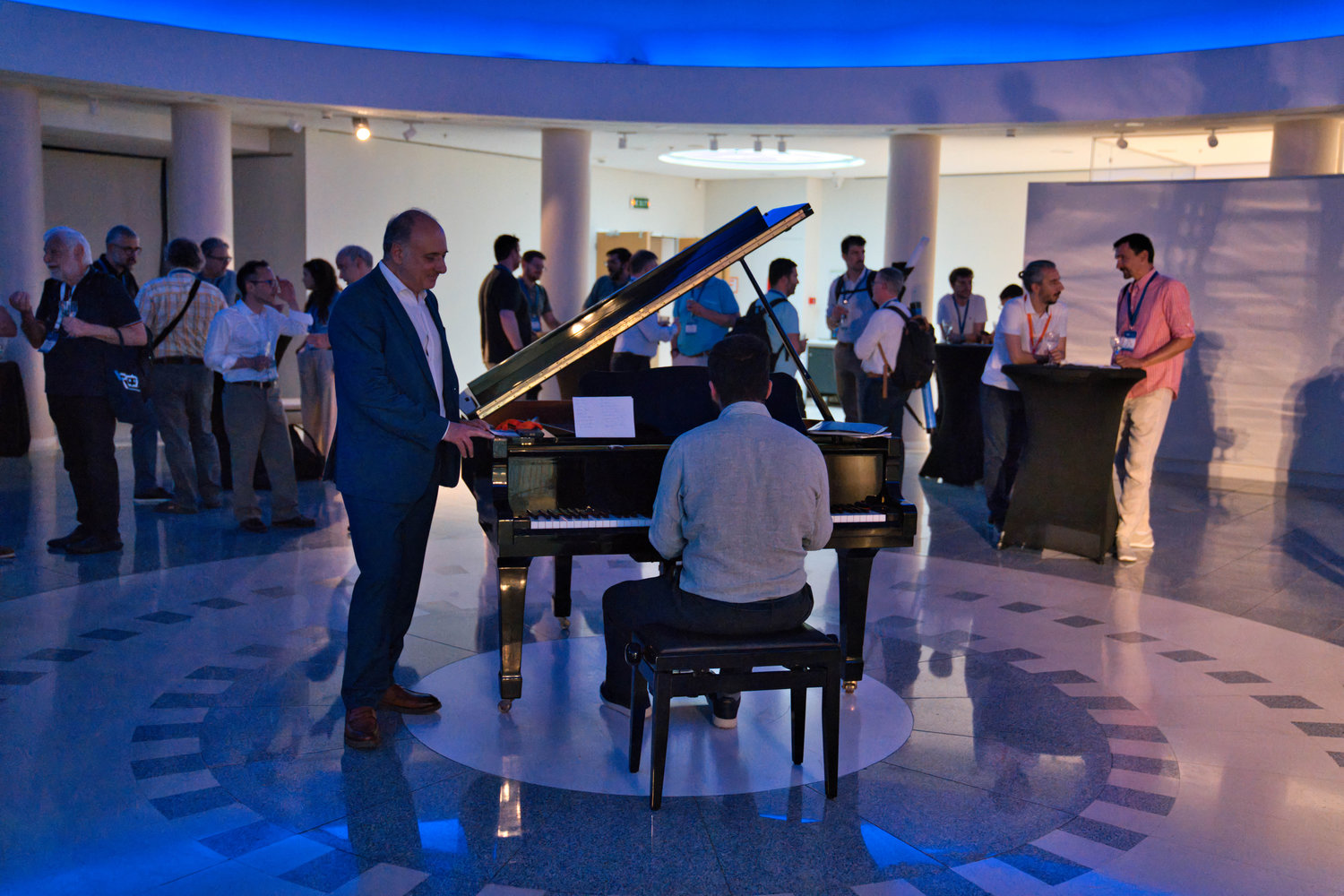
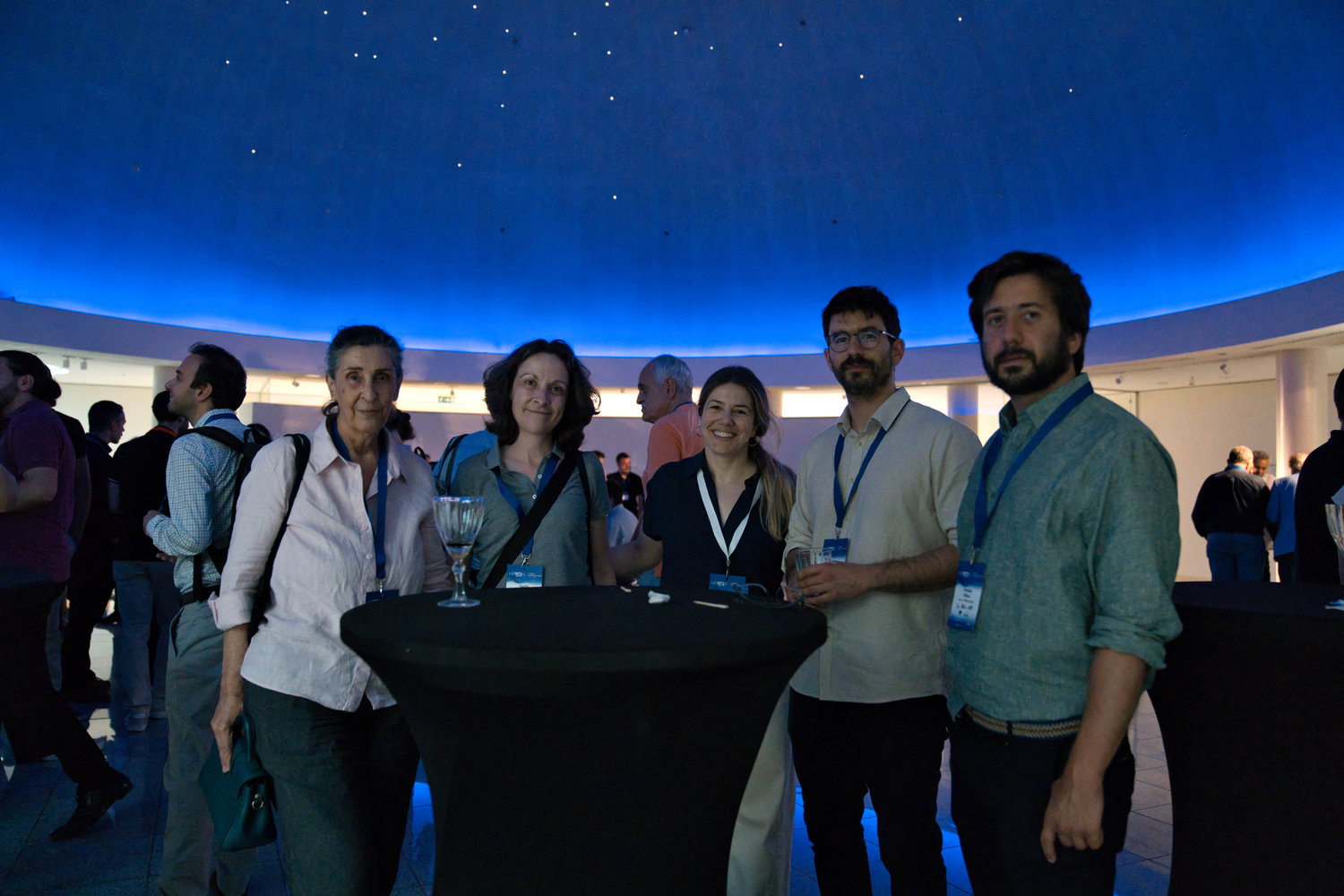
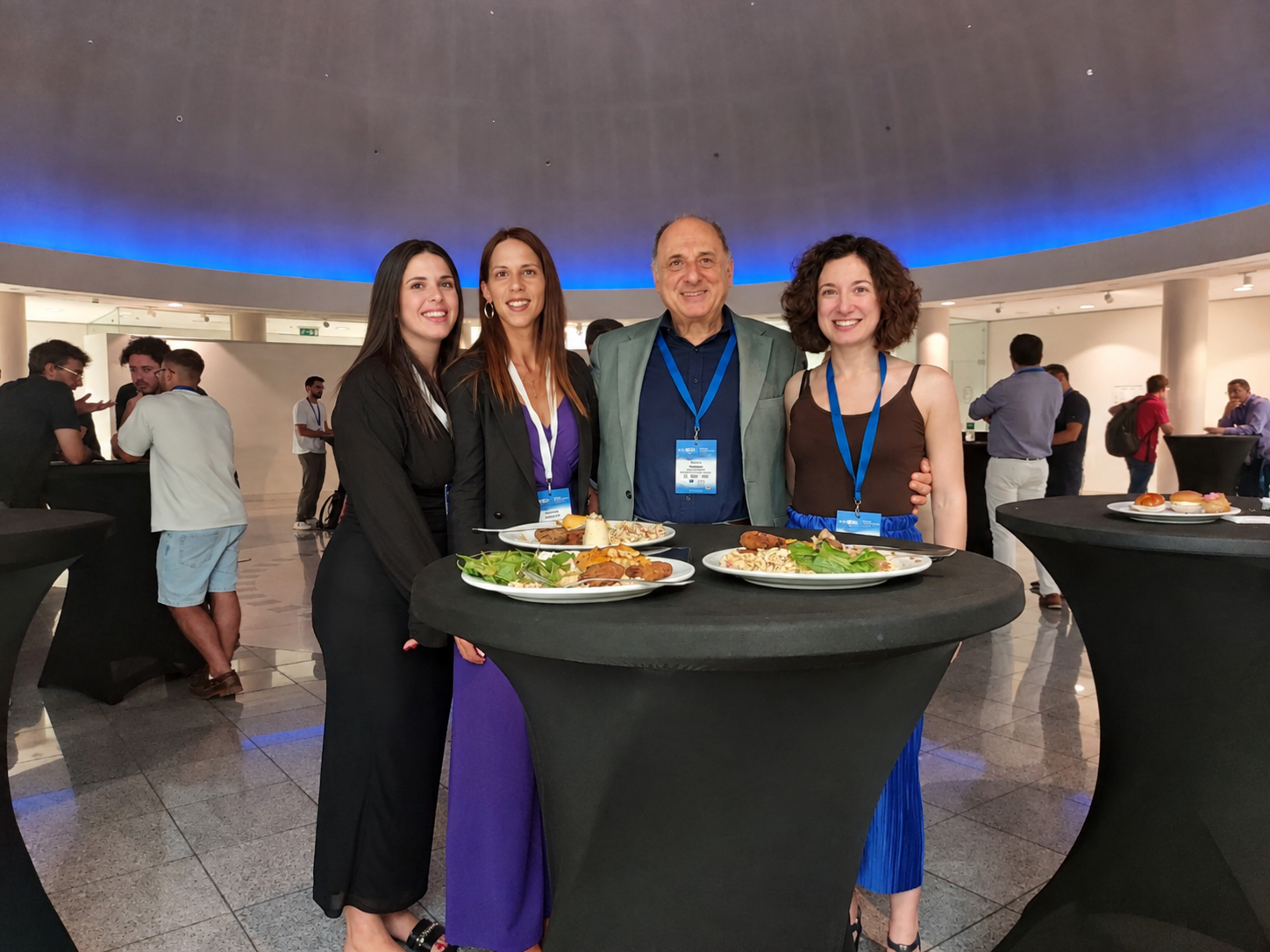
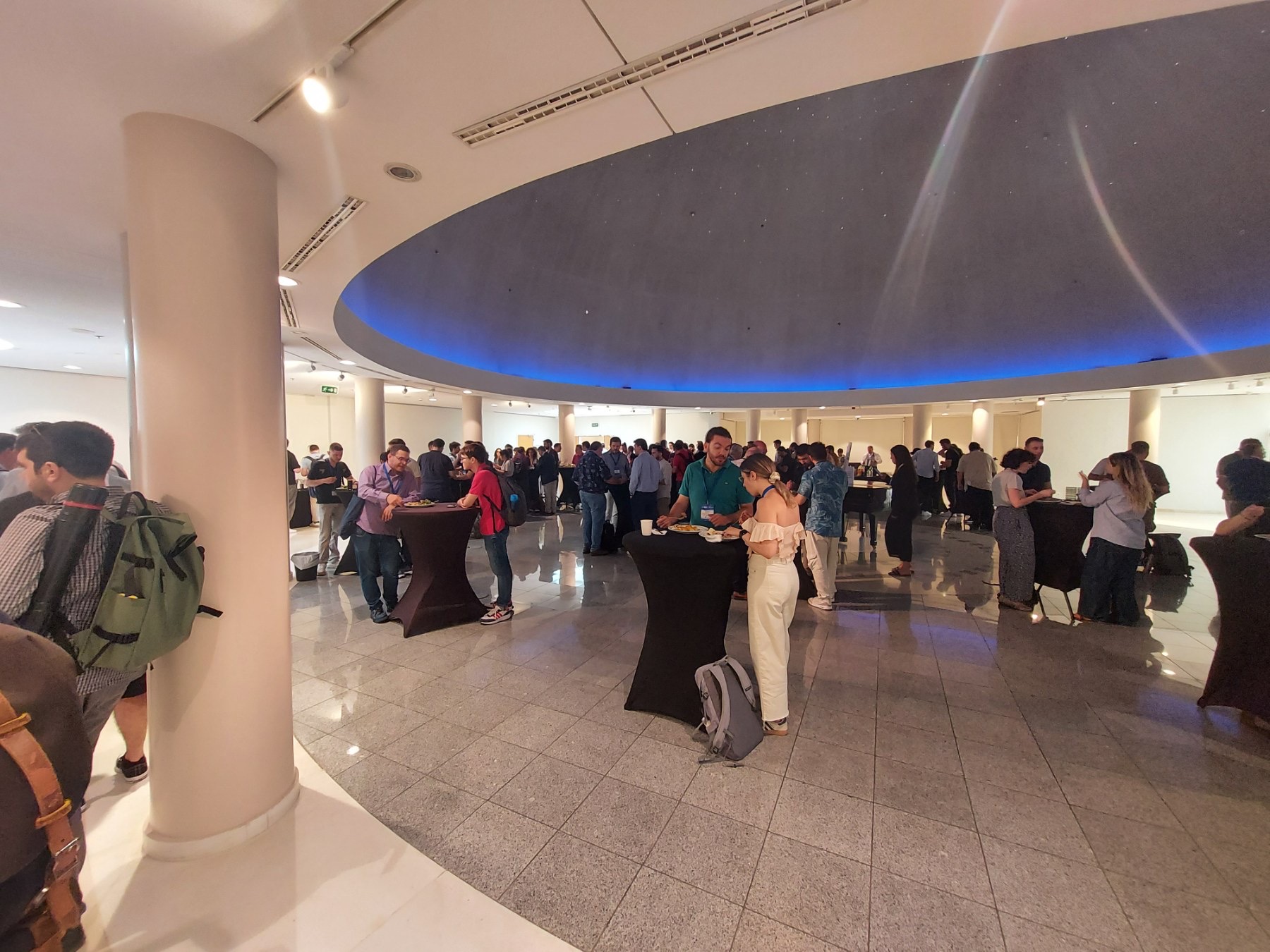
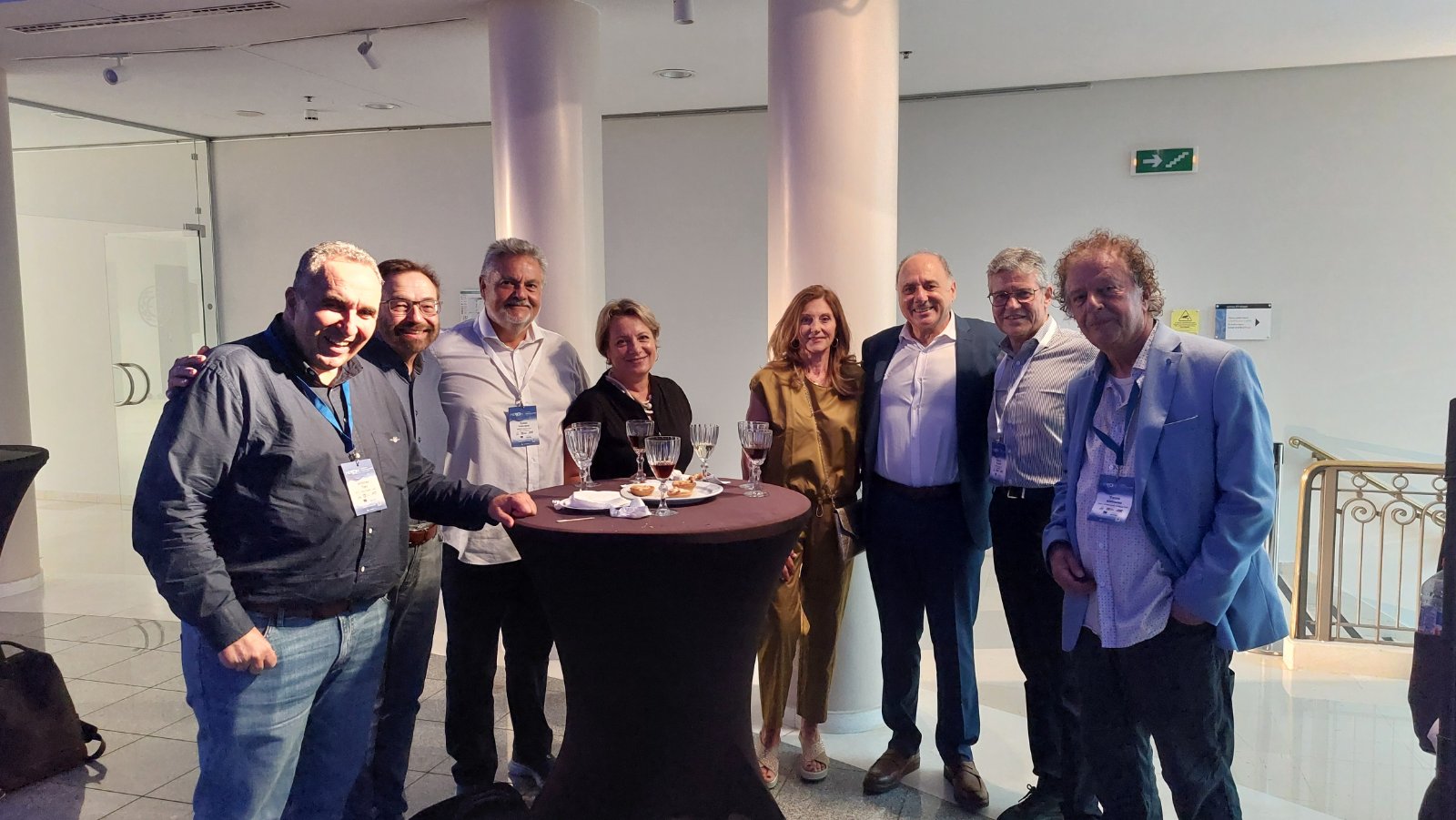
Finally, this two-day forum would not be complete without providing opportunities for social interaction and professional networking. One highlight of this category was the welcome reception on the first day, which took place under the dome of the historic Planetarium and where attendees enjoyed a glass of wine with delicious snacks while listening to a classical piano concert by Georgios Chatzichristodoulou, a graduate student at the NTUA School of Electrical & Computer Engineering and a junior researcher at HERON.


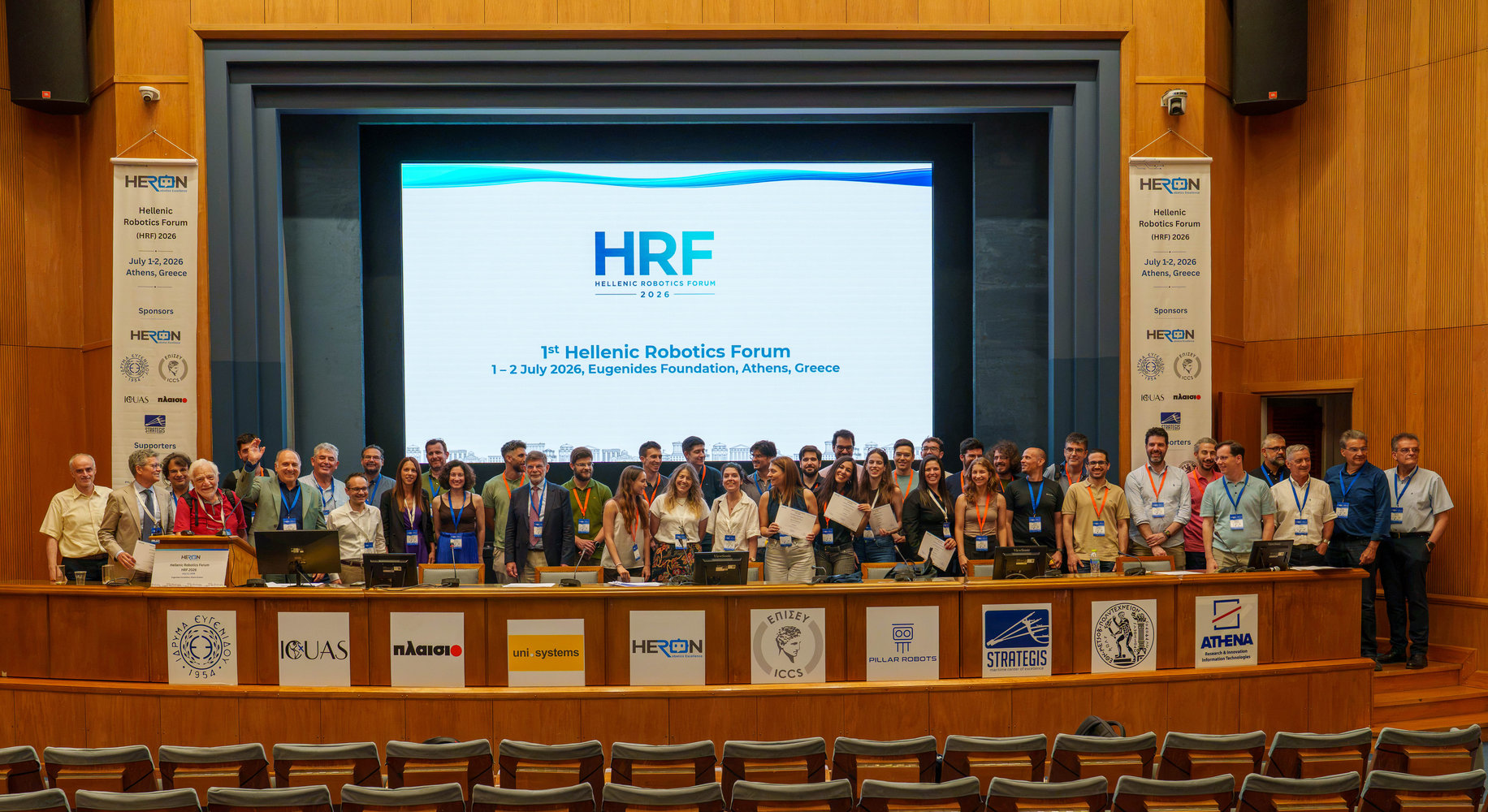 1–2 Jul 2026